MGMT Orthopedic Implants
Living with an orthopedic implant does not automatically end your active life. For many people, movement supports strength, balance, confidence, and long-term joint function. Yet every implant has different limits. A hip replacement, knee replacement, spinal fusion, or fixation plate may require a different exercise plan. So, can I exercise with orthopedic implants? In many cases, yes, but the safest answer depends on healing, implant location, surgical technique, and your medical history.
This guide explores the best exercises with orthopedic implants in 2026, using practical guidance from orthopedic specialists and rehabilitation professionals. Walking on a level surface, stationary cycling, water exercise, and controlled strength training may offer useful starting points. Imagine a quiet gym, stable shoes, light resistance, and slow repetitions. These details matter. A sudden pivot, deep squat, or heavy lift can place unnecessary stress on healing tissues. Pain is not always proof of damage, but persistent swelling, instability, warmth, or sharp pain deserves prompt medical attention.
Evidence and clinical experience support gradual progression, not rushed challenges. Your surgeon or physical therapist should confirm when an activity is appropriate. Implant materials continue to improve, but no device makes every movement risk-free. That distinction is easy to overlook. I also recognize that general exercise lists have limits; they cannot replace an individual assessment. Some recommendations may need adjustment after setbacks, reduced mobility, or incomplete recovery. The goal is not to imitate an athlete. It is to build dependable movement, protect the implant, and make daily activities feel safer over time.
Safety after orthopedic implant surgery varies. A hip, knee, shoulder, or ankle implant has different loading limits. Your surgeon and physical therapist should clear each activity. They know your imaging, surgical approach, bone quality, and healing progress. General internet advice cannot replace that assessment.
Early movement often includes short walks, gentle range-of-motion work, and prescribed muscle exercises. Keep the surface level and supportive. Use a rail on stairs, and avoid twisting while carrying weight. Progress slowly: increase duration before intensity, then add resistance under supervision.
Pain that worsens during exercise or remains elevated the next morning deserves attention. Swelling, warmth, drainage, fever, calf pain, or sudden instability needs prompt medical review. Do not push through these signs.
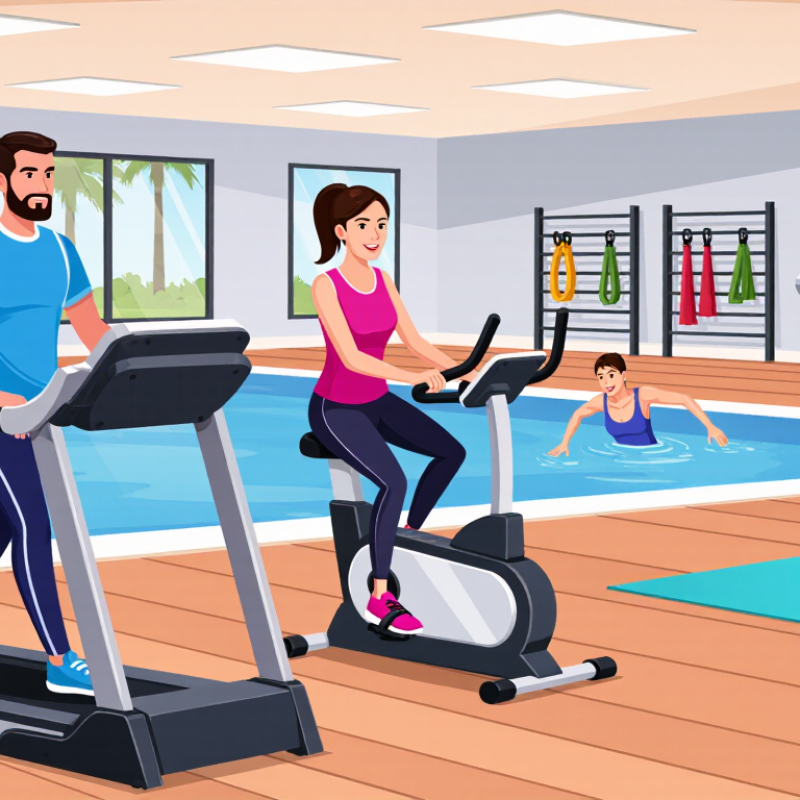
Later, many people return to cycling, swimming, controlled strength training, or low-impact cardio. Swimming requires a fully healed incision. Cycling should begin with low resistance and a stable setup. Heavy jumping, rapid pivots, and contact sports may create unnecessary stress, depending on the implant and bone healing. A plan can look safe on paper yet fail in real life. Fatigue changes balance. Small errors count. Keep a simple log of pain, swelling, exercise time, and recovery. Bring it to follow-up visits, because your actual response may matter more than a standard timeline.
2026 Best Exercises With Orthopedic Implants?
Choosing low-impact exercise after joint replacement requires patience, not bravado. I once assumed swimming was always the safest option. That view was too broad. A healing incision, weak muscles, or poor balance can change the risk. Your surgeon or physical therapist should confirm movement limits before exercise begins.
The World Health Organization’s 2020 Guidelines recommend 150–300 minutes of moderate aerobic activity weekly for adults. Begin with shorter sessions, such as a 10-minute walk on a level surface. Stationary cycling can reduce impact while supporting knee and hip motion. Water walking may feel comfortable, but avoid pools until the wound has fully healed. Stop if swelling increases, your joint feels unstable, or pain changes your walking pattern.
Strength work still matters. The Centers for Disease Control and Prevention recommends muscle-strengthening activity at least two days each week. Use controlled exercises, such as supported sit-to-stands, gentle bridges, and resistance-band work. Keep your back supported and avoid twisting under load. The American Academy of Orthopaedic Surgeons notes that gradual strengthening supports function after joint replacement, but individual restrictions vary. I sometimes progress too quickly. That mistake taught me to measure success by steadier movement, not heavier resistance.
2026 Best Exercises With Orthopedic Implants?
Strength and Mobility Exercises for Implant Support
Exercise after orthopedic implant surgery should rebuild movement without challenging healing tissues. Always follow your surgeon’s or physical therapist’s restrictions. Implant location, surgical technique, bone quality, and recovery speed all matter. A routine that helps one person may irritate another.
Begin with controlled movements, such as ankle pumps, heel slides, and short walks on a level surface. These exercises support circulation and reduce stiffness. Later, approved strength work may include sit-to-stand practice, gentle bridges, and resistance-band exercises. Keep your knees aligned with your toes. Move slowly. Breathing matters. For balance, stand near a sturdy counter and shift weight carefully from side to side. Stop if you notice sharp pain, sudden swelling, unusual warmth, drainage, or a new feeling of instability.
Tips: Use a firm chair and supportive shoes. Track walking time, discomfort, and swelling in a simple notebook. Increase only one factor at a time, such as repetitions or distance. Recovery is rarely perfectly linear. A longer walk may feel fine one day and surprisingly difficult the next. That is not failure, but it deserves attention. Avoid jumping, twisting, heavy lifting, or deep joint positions until your clinical team approves them. A small, steady range of motion is often safer than forcing a dramatic stretch.
Progressing exercise intensity after orthopedic implant surgery requires patience and professional guidance. Your surgeon should confirm healing before any structured training begins. A physical therapist can assess movement quality, strength, balance, and joint stability. Early exercises may include ankle pumps, gentle range-of-motion work, supported walking, or water-based movement. Keep the effort comfortable. Sharp pain is not a useful challenge.
Intensity should increase gradually, often through longer sessions before heavier resistance. A stationary bike, resistance bands, or light weights may become appropriate after clinical clearance. Your therapist might ask you to perform ten controlled sit-to-stands from a firm chair. Later, you may add resistance or extra repetitions. Progress is rarely linear. Some weeks feel strong, while swelling returns after a busy day. That setback deserves attention, not embarrassment.
Tips: Follow your prescribed limits. Track pain, swelling, sleep, and walking distance. Stop if symptoms worsen during exercise or remain elevated the next day. Avoid copying online routines, even when they appear gentle. Implant location, surgical technique, bone quality, and recovery speed all affect safe progression. Ask whether your form is correct, because small compensations can overload nearby muscles. Reassessment matters. Endless caution can also reduce confidence and strength, so the plan should change as your body demonstrates readiness.
2026 Best Exercises With Orthopedic Implants?
Warning Signs That Require Medical Evaluation
Exercise can support strength and confidence after orthopedic implant surgery. However, pain should not be treated as a challenge to overcome. Follow the activity plan provided by your surgeon or physical therapist, especially when increasing resistance, walking distance, or balance work.
Watch for pain that suddenly worsens, changes your walking pattern, or continues after rest. New clicking with weakness, a feeling of looseness, or repeated joint giving-way also deserves medical review. Mild muscle fatigue can be expected. Sharp, deep, or progressively increasing pain is different. I have seen people dismiss these changes as normal recovery, and that delay can complicate assessment.
Check the surgical area after exercise. Increasing swelling, redness, warmth, fluid drainage, or a wound that opens needs prompt medical advice. Fever or chills may signal infection. New numbness, unusual weakness, or a pale or cold limb requires urgent evaluation. Calf swelling and tenderness can be serious, particularly with sudden shortness of breath or chest pain. Seek emergency care for those symptoms.
Stop the exercise until a clinician advises you otherwise. Do not adjust medication or force a painful movement without professional guidance. Recovery is rarely perfectly linear, and that is easy to forget. Keep a brief record of the exercise, pain level, swelling, and timing; these details can help your healthcare team judge what changed.
| Exercise or Activity | Commonly Suitable Implant Situations | Primary Benefits | Recommended Starting Approach | Important Precautions | Warning Signs Requiring Medical Evaluation | Suggested Response |
|---|---|---|---|---|---|---|
| Walking on a level surface | Total knee, total hip, partial joint, and many spinal-fusion rehabilitation programs after medical clearance. | Improves cardiovascular fitness, walking tolerance, joint mobility, and muscle endurance with relatively low impact. | Begin with short, comfortable walks on level ground; increase duration gradually rather than suddenly increasing speed or distance. | Use an assistive device if prescribed. Avoid uneven terrain until balance and strength have improved. | New or worsening pain, increasing swelling, marked limping, wound drainage, fever, or sudden loss of function. | Contact the surgical team promptly |
| Stationary cycling | Often used after knee or hip replacement once sufficient range of motion and wound healing have been achieved. | Provides low-impact aerobic conditioning and may support knee and hip range of motion. | Use low resistance and a comfortable seat height; pedal forward smoothly without forcing the joint. | Do not cycle through sharp pain. Follow hip-specific movement restrictions and surgical timing instructions. | Persistent groin or joint pain, catching or locking, increasing warmth or swelling, or inability to bear weight afterward. | Stop the activity and arrange medical advice |
| Aquatic walking or gentle water exercise | May be appropriate for joint-replacement rehabilitation after the incision is fully closed and the clinician permits pool use. | Water buoyancy reduces joint loading while providing resistance for walking and gentle strengthening. | Start in waist- to chest-deep water with slow movements and supervised entry and exit. | Do not enter a pool with an open or draining incision. Use caution on wet surfaces and avoid forceful twisting. | Incision drainage, wound opening, fever, increasing redness, or severe pain after the session. | Seek prompt clinical evaluation |
| Low-resistance strengthening | Commonly prescribed after knee, hip, shoulder, or spinal procedures under a structured rehabilitation plan. | Builds supporting muscle strength, improves stability, and helps restore daily function. | Use controlled movements, light resistance, and a comfortable range; prioritize technique over load. | Avoid breath-holding, sudden jerking, heavy lifting, and exercises not approved for the implant or surgical approach. | Sudden popping with loss of strength, new deformity, rapidly increasing swelling, or pain that persists or escalates. | Stop exercising and contact the surgeon or clinician |
| Core stabilization and posture exercises | May be used after spinal surgery or lower-extremity joint replacement when cleared by a rehabilitation professional. | Supports trunk control, posture, balance, and safe movement during everyday tasks. | Begin with gentle, neutral-spine exercises such as abdominal bracing, as individually prescribed. | Avoid loaded spinal flexion, twisting, or high-impact movements when restricted by the surgical plan. | New or progressive weakness, numbness, loss of coordination, severe back pain, or new bowel or bladder problems. | Seek urgent medical evaluation |
| Balance and flexibility training | Often useful after lower-limb joint replacement once basic weight-bearing is safe and approved. | Improves joint mobility, balance, fall prevention, and confidence with daily activities. | Perform near a stable support or with supervision; use gentle stretches without bouncing. | Do not force range of motion or practice unsupported balance if there is a significant fall risk. | Repeated giving way, a fall with new pain, inability to move the joint normally, or sudden instability. | Pause training and obtain clinical assessment |
| Low-impact aerobic exercise | Examples include an elliptical trainer or carefully progressed cardio exercise after recovery milestones are met. | Supports heart health, endurance, weight management, and general physical function. | Use a gradual progression based on symptoms, gait quality, and clinician guidance. | Avoid high-impact jumping, running, or rapid direction changes until specifically cleared. | Chest pain, severe shortness of breath, fainting, calf swelling or pain, or sudden unexplained breathlessness. | Seek emergency medical care |
| Daily functional movement practice | Relevant to most orthopedic implants, including joint replacements and fracture-fixation recovery. | Improves safe transfers, stair use, reaching, lifting mechanics, and independence. | Practice clinician-approved movements slowly and use recommended assistive equipment. | Respect weight-bearing, lifting, bending, and hip- or shoulder-specific restrictions until formally released. | Increasing pain at rest or at night, persistent swelling, redness or warmth, fever, drainage, or a new leg-length or alignment change. | Arrange prompt medical evaluation |
Ask your surgeon or physical therapist to confirm healing and movement limits. They can check strength, balance, motion, and stability. Do not copy a routine because it looks gentle. I used to assume “gentle” always meant safe. It does not.
Start with a 10-minute walk on level ground. A stationary bicycle can reduce impact while supporting knee or hip motion. Water walking may feel easier, but wait until the incision fully heals. Get clinical clearance before entering a pool.
A common target is 150–300 minutes of moderate aerobic activity weekly. Build toward it gradually. Short sessions still count. Ten minutes is enough to begin. Your personal limits matter more.
Controlled sit-to-stands, gentle bridges, and resistance-band exercises may help. Use a firm chair and support your back. Avoid twisting while carrying resistance. Form matters more than heavier equipment.
Increase session length before adding heavier resistance. A therapist may begin with ten controlled sit-to-stands. Later, repetitions or light resistance may increase. Progress is not linear. Some weeks wobble.
Stop if swelling increases, sharp pain appears, or the joint feels unstable. Stop if pain changes your walking pattern. Symptoms that remain worse the next day deserve review. Do not push through warning signs. Pain is information.
Record pain, swelling, sleep, and walking distance. Note symptoms during exercise and the following day. This simple record can reveal overload. I sometimes progressed too quickly. That was poor measurement, not progress.
Implant location, surgical technique, bone quality, and recovery speed affect exercise choices. A professional can identify small compensations that overload nearby muscles. Endless caution may reduce confidence and strength. The plan should change when your body shows readiness.
Can I exercise with orthopedic implants? In many cases, yes, but safe activity depends on the implant location, surgical recovery, healing progress, and individual medical history. After surgery, begin only when cleared by your orthopedic professional and focus on controlled, low-impact activities such as walking, cycling, swimming, or gentle water exercise. These options can support cardiovascular health while reducing stress on the joints and implant.
A balanced program may also include carefully supervised strengthening, flexibility, balance, and mobility exercises to support surrounding muscles and improve stability. Increase duration and intensity gradually, avoiding sudden twisting, heavy loading, or high-impact movements unless specifically approved. Stop exercising and seek medical evaluation if you experience increasing pain, swelling, warmth, redness, instability, unusual clicking, numbness, or a noticeable decline in movement. Regular follow-up and professional guidance can help ensure that exercise supports long-term function without placing unnecessary strain on the implant.
