MGMT Orthopedic Implants MGMT Orthopedic Implants

7 Best Spinal Implants for Treating Spine Conditions

Time:2026-11-27 Author:Sienna
0%

Spinal implants can help stabilize, align, or decompress the spine when a condition causes persistent pain, nerve pressure, or instability. But an implant is not a cure by itself. The right choice depends on the diagnosis, bone quality, anatomy, symptoms, and the patient’s goals. A cage, screw, rod, or artificial disc serves a different purpose. The details matter.

How are spinal conditions treated with implants? Surgeons first assess imaging, physical findings, medical history, and non-surgical options. If an operation is appropriate, they select a device and technique for the specific problem. Dr. Alexander R. Vaccaro, an orthopedic spine surgeon and researcher, is a recognized voice in spine care. The following is an editorial paraphrase of a general principle in that field, not a verified verbatim quotation: “Choose an implant to support the treatment goal and the patient’s anatomy.” That distinction matters; device selection should be based on clinical judgment, not a product list alone.

This guide reviews seven commonly used spinal implant types and the conditions they may address. You’ll see how screws and rods can stabilize a segment, while artificial discs aim to preserve motion in selected cases. A small implant may make a major difference. It can also bring risks, recovery demands, and limits. Patients should ask about alternatives, expected benefits, complications, and the surgeon’s experience with the proposed device. No list replaces individualized medical advice.
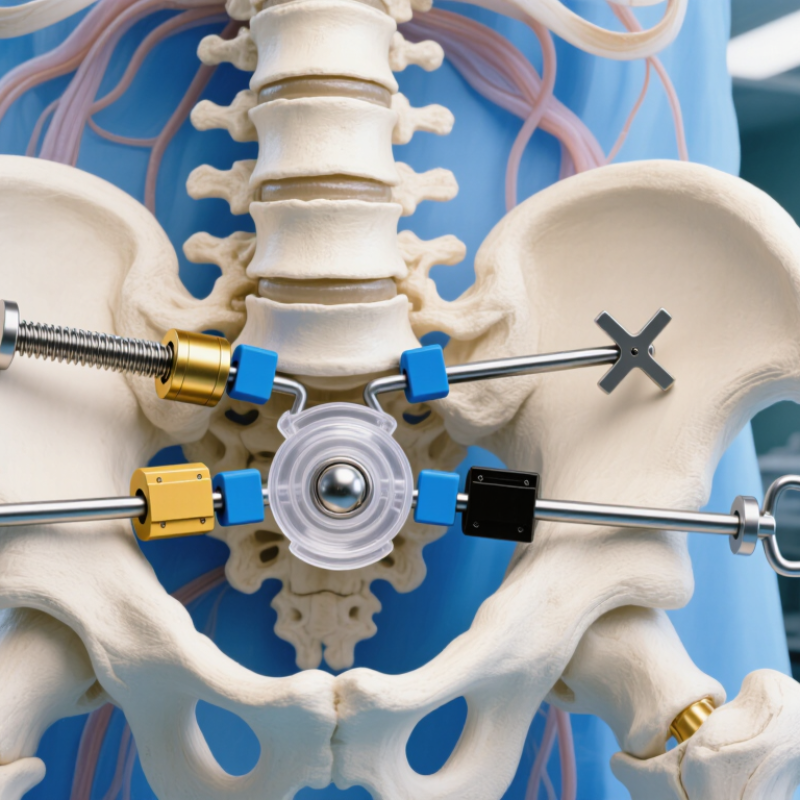
7 Best Spinal Implants for Treating Spine Conditions

Clinical Indications: When Spine Conditions Require Implant Support

Spinal implants are considered when a condition makes the spine unstable, deformed, or unable to heal safely without added support. Examples include vertebral fractures, certain spinal tumors, severe deformity, and instability from degenerative changes. A surgeon may use screws and rods to hold vertebrae in position, or a cage to support the space between them. The choice depends on the affected level, bone quality, and the operation being planned. Not every case qualifies.

Implant support is usually discussed when pain, nerve symptoms, or loss of function match findings on examination and imaging. A scan alone is not enough. Many people with disc wear do not need surgery, and non-surgical care may remain appropriate. That distinction matters. Before recommending an implant, clinicians weigh expected benefits against risks such as infection, nerve injury, non-union, or later implant problems. They also consider smoking, osteoporosis, other health conditions, and the patient’s goals. The decision can feel less certain than a list of indications suggests; careful review and shared discussion help clarify whether added support is likely to address the actual problem.

7 Spinal Implants and Their Common Clinical Uses

An educational overview of situations in which different implant types may provide structural support.

A bar indicates an established use in at least some patients; it does not show how often an implant is used, compare outcomes, or determine whether it is appropriate for an individual. Implant choice depends on the diagnosis, anatomy, and clinical assessment.

Seven Implant Types: Screws, Rods, Cages, Discs, Plates, Hooks, and Anchors

Spinal implants help stabilize, support, or replace structures affected by injury or disease. Screws are placed in vertebrae to create secure attachment points; rods connect them and limit movement while a fusion heals. Small adjustments in screw position can matter, because nearby nerves and blood vessels must be protected.

Cages sit between vertebrae, helping maintain space and often holding bone graft material. Artificial discs replace a damaged disc and may preserve motion in carefully selected patients. Plates fasten across vertebrae, commonly in the neck, while hooks grip parts of the bone when a surgeon needs another point of fixation. Anchors can secure soft tissue or connect parts of a stabilizing construct, depending on the operation. The categories can overlap.

No single implant suits every spine. A surgeon considers the affected level, bone quality, symptoms, and imaging before choosing a design and placement. A cage that restores height in one case may not be appropriate in another. That detail is easy to miss. Implants also carry risks, including infection, loosening, or failure to achieve fusion. Patients should ask what each device is meant to do, how recovery may affect movement, and which warning signs require prompt medical attention.

FDA Milestone: First U.S. Lumbar Artificial Disc Approved in 2004

In October 2004, the FDA approved the first lumbar artificial disc for use in the United States. The decision marked a shift: selected adults with single-level degenerative disc disease could consider motion-preserving surgery instead of fusion. It was a milestone, not a promise. The FDA approval record, PMA P040006, documents the indication and supporting evidence. The pivotal study included 304 patients treated with disc replacement or spinal fusion. That made the decision more than a technical novelty; it gave clinicians comparative clinical data to discuss with patients.

At two years, FDA-reported overall success was 57.1% for disc recipients and 46.5% for fusion controls. These figures describe a study endpoint, not a guarantee that an individual will improve. They also do not mean artificial discs suit every spine, or every patient. Candidacy depends on factors such as the affected level, bone health, symptoms, and prior treatment. A small detail matters: preserving movement sounds appealing, but it is not the same as restoring a healthy spine. The approval opened an option, while leaving careful screening and long-term follow-up essential. The numbers help, but they do not tell the whole story.

How Surgeons Compare Fusion, Motion Preservation, and Clinical Evidence

Spinal implants serve different purposes, so surgeons compare more than a device’s strength. Pedicle screw-and-rod systems and interbody cages help stabilize segments during fusion. The goal is bone growth across the treated area. An artificial disc instead aims to preserve motion at a selected level. Dynamic stabilization devices may allow limited movement, but their role depends on the condition and supporting evidence. These approaches are not interchangeable. A scan showing a well-positioned implant does not, by itself, prove lasting pain relief.

Clinical evidence matters. Surgeons may review pain and function scores, reoperation rates, complications, and follow-up length—not just fusion rates or motion measurements. They also consider whether study participants resemble the patient in front of them. A result from carefully selected patients may not predict outcomes for someone with different anatomy or health risks. Evidence can be uneven. Some implant types have longer follow-up, while newer designs may have less long-term data. Surgeons weigh those limits alongside factors such as bone quality, spinal level, and prior surgery. There is no perfect comparison; even useful studies leave unanswered questions. A clear discussion should explain expected benefits, risks, alternatives, and what remains uncertain for the individual case.

Safety and Follow-Up: FDA Device Reports, Imaging, and Revision Risks

Safety does not end when a spinal implant is placed. Ask which device is planned, why it suits your condition, and what follow-up is expected. FDA device-report databases may list problems such as breakage or movement, but reports can be incomplete. They do not prove a device caused an injury or show how often a problem occurs. Review relevant FDA notices with your care team. Keep your implant card and surgical records. Small details matter.

Follow-up imaging depends on the operation and your symptoms. X-rays can show alignment and changes in hardware; CT may help assess bone healing. MRI decisions require checking implant safety information, and metal can affect image quality. Follow your clinician’s schedule. Don’t assume one scan answers every question. Persistent or changing symptoms deserve medical review. Revision surgery may involve risks such as infection, blood loss, nerve injury, or incomplete relief, and it may not solve the original problem. I’d want a clear explanation of what imaging can—and cannot—tell us before any decision about another operation.

7 Best Spinal Implants for Treating Spine Conditions — Safety and Follow-Up: FDA Device Reports, Imaging, and Revision Risks

Implant choice depends on the diagnosis, anatomy, and patient-specific risks; no implant type is best for everyone. This table summarizes common implant categories, not a ranking or a substitute for individualized clinical advice.

Implant category Typical purpose Safety considerations and FDA device reports Imaging and follow-up Revision considerations
Pedicle screw-and-rod fixation Stabilizes vertebrae, often as part of a fusion for instability, deformity, or selected fractures. Potential complications include infection, nerve or blood-vessel injury, screw malposition, loosening, breakage, and failure of fusion. FDA reports may describe device problems, but they do not establish how often these occur or prove that a device caused an outcome. X-rays are commonly used to assess alignment and hardware position. CT may be considered when fusion or hardware position needs closer assessment. MRI compatibility and image quality depend on the specific implant and imaging protocol. Revision may be considered for symptomatic hardware failure, infection, nonunion, or persistent nerve compression. Imaging findings alone do not necessarily mean revision is needed.
Interbody fusion cage Placed between vertebral bodies to support the disc space and help achieve fusion; used in selected cervical or lumbar procedures. Potential concerns include cage migration or subsidence, nonunion, infection, and injury related to the surgical approach. Risk depends on anatomy, bone quality, surgical technique, and other patient factors. Follow-up X-rays may assess position and alignment. CT can help evaluate suspected nonunion or subsidence. Metal can create MRI artifact; implant-specific MRI conditions should be checked before scanning. Revision is generally considered in context of symptoms and findings such as clinically significant migration, nonunion, or ongoing neural compression; revision can be technically complex.
Cervical artificial disc Replaces a cervical disc in selected patients with symptomatic disc disease, aiming to preserve motion rather than fuse the treated level. Potential complications include implant migration or wear, persistent symptoms, heterotopic bone formation, and the usual risks of cervical surgery. Eligibility and outcomes vary; it is not appropriate for every patient. Clinical review and X-rays may assess implant position and motion. MRI may be used for new or persistent symptoms, subject to the device's MRI labeling and potential artifact. If further surgery is needed, conversion to fusion may be considered, depending on the cause of symptoms, implant condition, and anatomy.
Anterior cervical plate and screws Provides added stabilization across a cervical fusion, often alongside an interbody graft or cage. Potential concerns include screw or plate loosening, breakage, prominence, swallowing difficulty, and nonunion. Symptoms such as worsening swallowing or new neurologic problems warrant clinical assessment. X-rays are commonly used to follow alignment and hardware. CT may be useful if fusion is uncertain. MRI assessment may be affected by metal artifact, and MRI conditions must be verified for the specific implant. Removal or revision is not routine solely because hardware is present; it may be considered for clinically significant symptoms, infection, hardware problems, or nonunion.
Vertebral body replacement implant Reconstructs a vertebral body after removal or loss of vertebral bone, for example in selected cases involving tumor, trauma, or severe spinal damage. Potential risks include implant subsidence or displacement, failure of the reconstruction, infection, and complications related to the extensive surgery that may be required. Follow-up imaging is selected according to the underlying condition and reconstruction; X-rays or CT may assess alignment and implant position. MRI suitability and artifact depend on the implant and scan protocol. Revision may be required for loss of stability, implant displacement, infection, or disease-related changes. These procedures can be complex and require specialist evaluation.
Sacroiliac joint fusion implant Stabilizes the sacroiliac joint in selected patients with persistent, appropriately evaluated joint-related pain. Potential concerns include persistent pain, nerve irritation, implant malposition or loosening, infection, and failure to achieve fusion. A careful diagnostic assessment is important because pain can have other causes. Follow-up focuses on symptoms and, when indicated, X-rays or CT to assess implant position and fusion. Imaging findings should be interpreted alongside the clinical picture. Revision may be considered for persistent symptoms linked to a correctable implant or fusion problem, after other pain sources have been assessed.
Spinal cord stimulation system Uses electrical stimulation to manage certain chronic pain conditions; it does not fuse or mechanically stabilize the spine. Potential device-related issues include lead migration or breakage, infection, loss of stimulation, and battery or programming problems. FDA reports are useful for identifying reported problems but cannot provide a reliable complication rate by themselves. Follow-up includes symptom review, device checks, and programming as needed. MRI is permitted only under the conditions specified for the complete system; some systems or scan settings may restrict MRI access. Revision or removal may be considered for infection, persistent loss of benefit, troublesome stimulation, or hardware problems, after discussion of alternatives and expected benefits.

How to interpret FDA device reports: The FDA's MAUDE database contains reports of suspected device-related deaths, injuries, and malfunctions. Reports can be incomplete, may be submitted by different parties, and do not by themselves establish causation or provide the number of people exposed. They should not be used alone to compare device safety or calculate complication rates. Always confirm MRI safety conditions using the labeling for the exact implanted system and consult the treating clinician for follow-up decisions.

FAQS

When might a spinal implant be considered?

It may be considered when a fracture, tumor, severe deformity, or degenerative change makes the spine unstable. Not every case qualifies.

What information helps determine whether an implant is appropriate?

Clinicians compare symptoms and examination findings with imaging. A scan alone is not enough.

Do people with disc wear always need surgery?

No. Many people can continue with non-surgical care. The choice depends on symptoms, health, and treatment goals.

What does an implant do during spine surgery?

Screws and rods can hold vertebrae in position. A cage may support the space between them.

What did the first U.S. lumbar artificial disc approval mean?

In 2004, selected adults with single-level disc disease gained a motion-preserving option. It was not a promise of better results for everyone.

What were the reported two-year study results?

Overall success was 57.1% for disc recipients and 46.5% for fusion controls. Those figures do not predict an individual outcome.

What should patients ask about device safety and follow-up?

Ask why the planned device suits your condition and which checkups are expected. Keep your implant card and surgical records.

What can follow-up imaging show?

X-rays can show alignment and hardware changes; CT may help assess bone healing. MRI needs an implant-safety check, and metal can affect image quality.

What should patients know about device reports and revision surgery?

Reports may be incomplete and cannot prove a device caused harm or show how often problems occur. Revision surgery has risks, and relief is not guaranteed.

Conclusion

How are spinal conditions treated with implants? When pain, instability, deformity, or nerve compression cannot be adequately managed with nonsurgical care, surgeons may use implants to support or reconstruct the spine. Options include screws and rods for stabilization, cages to maintain space between vertebrae, artificial discs to preserve motion, plates for added support, and hooks or anchors to secure the construct. The first lumbar artificial disc was approved for use in the United States in 2004, marking an important development in motion-preserving treatment.

Choosing an implant involves weighing spinal fusion against motion preservation, the patient’s condition, and available clinical evidence. Every approach has potential risks, so treatment planning and follow-up are essential. Surgeons may review imaging to assess implant position, healing, and changes over time, while device safety reports can provide additional context. Patients should also understand that complications may require further evaluation or revision surgery. Decisions are individualized and should be made with a qualified spine care team.

Sienna

Sienna

Sienna is a skilled marketing professional with a deep expertise in our company’s core products and services. With a passion for innovation and detail, she plays a pivotal role in crafting insightful blog posts that not only highlight the unique features of our offerings but also provide valuable......