 MGMT Orthopedic Implants
Can orthopedic implants be removed safely? In many cases, yes, but safety depends on the implant, healing status, symptoms, and surgical risks. A plate beneath healed skin may be removed through the original incision. A hip stem or spinal fixation system is different. Bone growth, scar tissue, and nearby nerves can make removal complex. The safest answer is rarely a simple yes.
Professional reports support careful, individualized decisions. The U.S. Food and Drug Administration monitors orthopedic-device complications through its MAUDE database, including infection, breakage, loosening, and difficult revision procedures. However, the FDA warns that adverse-event reports do not establish incidence or prove causation. That limitation matters. The American Academy of Orthopaedic Surgeons also emphasizes clinical examination and imaging before implant-related decisions. X-rays may show union, migration, or bone loss. Sometimes, CT scanning gives a clearer picture.
Registry data adds broader context. The American Joint Replacement Registry’s annual reports track millions of hip and knee procedures, including revision operations. The National Joint Registry of England and Wales similarly shows that revision is a continuing part of joint-replacement care, not an unusual event. Yet registry numbers cannot predict one patient’s outcome. A painful screw, a healed fracture, and a failed joint replacement require different reasoning. The answer may change after new imaging.
Removal can relieve irritation, but it can also cause infection, bleeding, nerve injury, refracture, or renewed pain. Patients should ask why removal is needed, what happens if the implant stays, and how recovery will be protected. Evidence is useful. Experience still matters. A careful surgeon must also admit uncertainty.
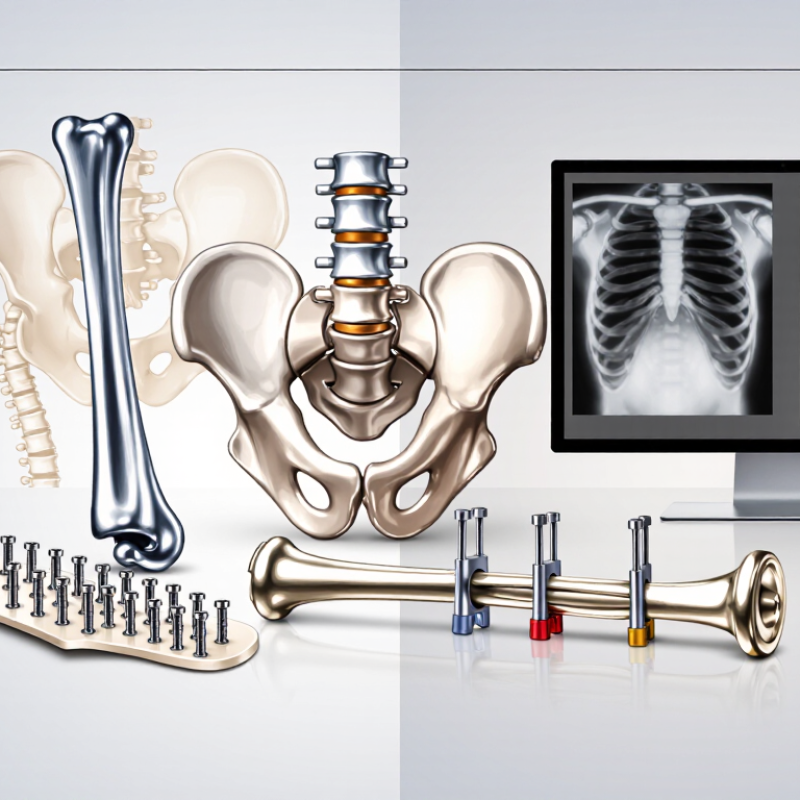
Can Orthopedic Implants Be Removed Safely?
When Orthopedic Implant Removal May Be Medically Necessary
Implant removal can be medically necessary, but pain alone does not prove implant failure. Surgeons may consider removal after deep infection, confirmed loosening, metal sensitivity, nerve irritation, or a healed fracture with persistent hardware pain. The American Academy of Orthopaedic Surgeons reports deep infection after primary joint replacement in roughly 1% to 2% of cases. Infection may cause warmth, drainage, fever, or increasing pain months after surgery. Delayed diagnosis can damage bone and soft tissue.
The decision requires evidence, not guesswork. Doctors may review X-rays, blood tests, aspiration results, and previous operative notes. The National Joint Registry’s 21st Annual Report has tracked more than three million joint procedures and shows revision risk varies with age, sex, implant type, and surgical indication. Removal itself can cause bleeding, nerve injury, fracture, or instability. Sometimes, replacing the implant is safer than removing it alone. The plan should match the underlying problem.
Tips: Ask what problem removal will solve. Request the infection testing plan. Confirm whether the bone has healed. Discuss anesthesia, recovery time, and possible replacement surgery. A second orthopedic opinion can expose overlooked details. Recovery is not always straightforward, and that uncertainty deserves honest discussion.
| Clinical Dimension | What the Evidence and Clinical Practice Indicate | Safety Considerations |
|---|---|---|
| Is removal routinely required? | No. Orthopedic plates, screws, rods, wires, and joint components are generally left in place when the bone has healed, the implant is functioning properly, and there are no significant symptoms or complications. | A second operation has its own risks, including infection, bleeding, nerve injury, blood clots, anesthesia complications, and incomplete symptom relief. |
| Confirmed or suspected infection | Removal may be medically necessary when an implant is associated with a deep infection, persistent drainage, an abscess, loosening, or infection that does not respond adequately to antibiotics and surgical treatment. | Treatment may require cultures, targeted antibiotics, removal of infected tissue, and sometimes temporary stabilization or staged reconstruction. |
| Pain, prominence, or soft-tissue irritation | Removal can be considered when a healed implant causes persistent, localized discomfort, pressure from prominent hardware, tendon irritation, restricted motion, or irritation from rubbing against nearby tissue. | Symptoms should be carefully evaluated because pain may also arise from nonunion, arthritis, nerve problems, infection, or another condition that implant removal will not correct. |
| Implant breakage, migration, or loosening | Removal or revision may be needed if hardware breaks, shifts position, becomes loose, damages nearby tissue, or no longer provides adequate fixation. | Imaging is needed to assess bone healing, implant position, and the risk of further structural failure. Additional fixation may be necessary rather than simple removal. |
| Delayed union or nonunion | If a fracture has not healed, removing fixation alone may make the bone unstable. The usual priority is to identify and treat the cause of failed healing before considering elective removal. | Removal before adequate healing can increase the risk of deformity, loss of alignment, refracture, or the need for further surgery. |
| Joint replacement components | Joint replacement components are not usually removed simply because they are present. Revision surgery may be indicated for infection, significant loosening, wear, instability, dislocation, fracture, or substantial loss of function. | Revision can be more complex than the original operation and may involve bone loss, longer recovery, and the need for specialized reconstruction. |
| Typical timing after fracture fixation | Elective removal is generally considered only after clinical and imaging evidence shows that the fracture has sufficiently healed. The exact timing depends on the bone, fracture pattern, implant location, symptoms, and patient health. | There is no universal timetable. X-rays or other imaging and an orthopedic examination are needed before deciding whether removal is appropriate. |
| Preoperative assessment | Assessment may include a physical examination, review of symptoms, imaging, medication review, evaluation of infection risk, and testing for conditions that affect healing or anesthesia safety. | Smoking, diabetes, poor circulation, immune suppression, blood-thinning medication, and poor bone quality can influence surgical risk and recovery planning. |
| Possible surgical risks | Potential complications include infection, bleeding, blood clots, wound problems, nerve or blood-vessel injury, difficulty removing damaged hardware, persistent pain, and the need for additional surgery. | The risk profile depends on the implant type, its location, how long it has been in place, scar tissue, bone quality, and the patient’s overall health. |
| Recovery after removal | Recovery varies widely. Some patients resume activity relatively quickly, while others need protected weight-bearing, physical therapy, wound care, or temporary activity restrictions. | The surgeon determines activity limits based on bone strength, the removal site, the amount of bone affected, and whether replacement fixation was performed. |
| When urgent medical review is needed | Prompt medical assessment is appropriate for increasing redness or swelling, warmth, drainage, fever, worsening pain, sudden loss of function, new deformity, numbness, or a visibly prominent or displaced implant. | These symptoms can indicate infection, implant failure, nerve or circulation problems, or another complication that should not be managed by elective scheduling alone. |
Medical note: Implant removal should be decided jointly with a qualified orthopedic professional after reviewing the patient’s symptoms, imaging, bone healing, and individual surgical risks. Removal is not automatically safer than leaving a well-functioning implant in place.
Surgeons may consider removal after deep infection, confirmed loosening, metal sensitivity, nerve irritation, or persistent hardware pain.
No. Pain may come from scar tissue, tendon irritation, or another joint problem. That assumption can be wrong.
Doctors may review X-rays, blood tests, fluid samples, and previous surgical records. A healed X-ray does not answer everything.
Often, yes, but removal is not a simple second operation. Risks include bleeding, infection, nerve irritation, fracture, and instability.
Reported rates vary by location and health. Studies describe roughly 3% to 20% complications, including wound problems and temporary nerve symptoms.
Yes. Screw holes may temporarily weaken bone, especially in weight-bearing areas. Crutches or activity limits may be needed.
Risk may increase with smoking, diabetes, poor circulation, previous infection, incomplete healing, or removal soon after fracture repair.
Recovery may include wound checks, imaging, gradual strength testing, and physiotherapy. Some people return to work quickly. Others need months.
Contact the surgical team for fever, spreading redness, drainage, calf swelling, or sudden worsening pain. Do not simply wait.
Yes. If the implant is stable and symptoms have another cause, observation may create fewer problems. The decision deserves honest review.
Can orthopedic implants be removed safely? In many cases, the answer is yes, but the decision depends on the patient’s condition, the purpose of the implant, and the risks involved. Removal may be medically necessary when an implant causes persistent pain, infection, loosening, tissue irritation, allergic reactions, or other complications. Doctors typically review medical history, perform a physical examination, and use imaging or laboratory tests to determine whether removal is appropriate and whether the bone has healed sufficiently.
The procedure is carefully planned to identify the implant’s location, condition, and relationship to nearby bones, nerves, and blood vessels. After removal, possible complications include infection, bleeding, nerve injury, bone damage, fracture, or continued discomfort. Recovery varies according to the implant type and the patient’s overall health and may involve wound care, activity restrictions, physical therapy, and follow-up imaging. With proper assessment and monitoring, many patients recover well, although long-term outcomes depend on the original injury, the reason for removal, and individual healing.
