MGMT Orthopedic Implants
How does weight affect the life of orthopedic implants? It is a practical question for patients, surgeons, and implant manufacturers. Body weight can increase forces across the hip, knee, or ankle during walking, climbing stairs, and standing. Over years, those repeated loads may contribute to polyethylene wear, loosening, or implant instability.
Dr. Steven M. Kurtz, an orthopedic implant outcomes researcher, has emphasized, “Obesity is associated with increased risks, but it does not define every patient’s result.” This perspective matters. Weight is only one part of implant longevity. Surgical alignment, implant design, bone quality, infection prevention, activity level, and rehabilitation also influence performance. A heavier patient with accurate component positioning may experience an excellent outcome. A lighter patient may still face complications.
The details are often visible in daily life. A knee implant may absorb higher forces when a patient rises from a low chair. A hip implant may experience repeated stress during uneven walking. These forces do not automatically mean early failure. They show why individualized assessment is essential.
Current evidence often links higher body mass index with revision risk, but studies do not predict one person’s future perfectly. That limitation deserves attention. BMI also cannot distinguish muscle from fat or describe movement patterns. Regular follow-up, weight management when appropriate, strength training, and careful activity choices may support implant longevity. However, patients should not interpret this as blame. Orthopedic decisions require shared discussion, reliable clinical evidence, and honest expectations. The answer is complex. <|endoftext|>
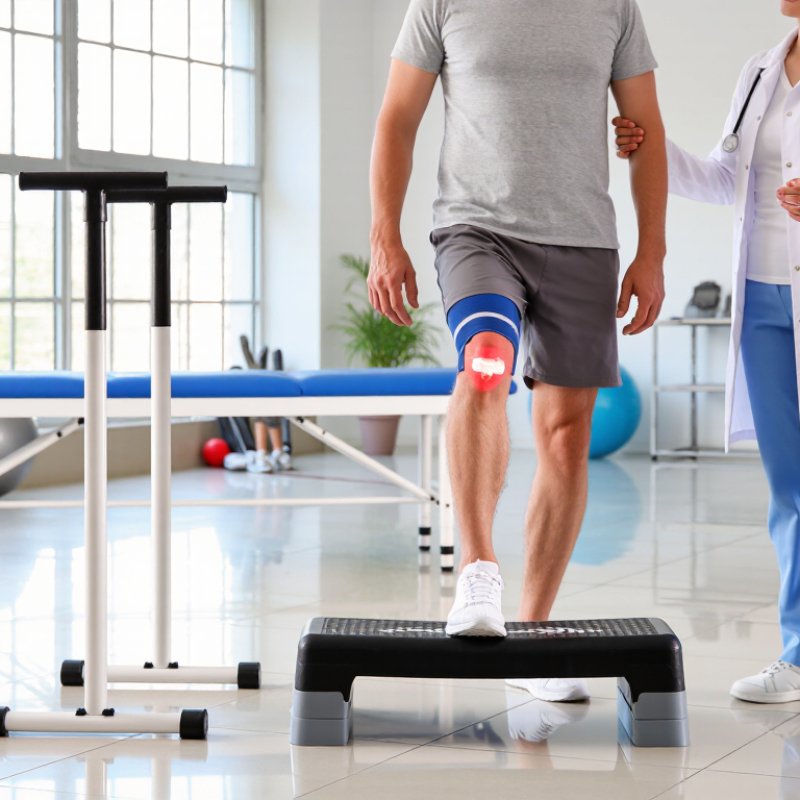
Orthopedic implants are medical devices placed inside the body to support, replace, or stabilize damaged bone and joints.
Common examples include joint replacements, bone plates, screws, rods, and spinal cages. Surgeons select each device according to anatomy, injury type, bone quality, age, and daily activity.
A hip implant may replace a worn joint surface, while a plate can hold a broken wrist steady during healing. During surgery, the team checks alignment, fixation, and soft-tissue balance.
X-rays and other imaging help confirm the implant’s position. Good technique matters as much as the device itself.
Weight can affect mechanical stress, especially in weight-bearing joints. However, body weight alone does not determine an implant’s lifespan.
Activity level, surgical accuracy, implant design, bone health, and follow-up care also influence long-term results. A heavier patient may need closer monitoring, but this is not an automatic prediction of failure.
The details matter.
Patients should follow rehabilitation instructions and report increasing pain, swelling, instability, fever, or reduced movement. Regular clinical reviews can identify loosening or wear before symptoms become severe.
Still, no chart can predict every outcome. Some implants perform well for decades, while others need revision earlier than expected. This uncertainty deserves honest discussion between the patient and orthopedic team.
Weight can influence how long an orthopedic implant remains functional, but it rarely acts alone. Each step creates force across the joint. Higher body weight may increase pressure, especially during stairs, lifting, or repeated impact. However, implant lifespan depends on several connected factors.
Surgical alignment is highly important. A well-positioned implant distributes load more evenly. Poor alignment may create unusual wear or loosen the implant earlier. Implant material, design, and fixation method also matter. Cemented and uncemented fixation have different healing requirements. Bone quality can affect stability, particularly in older adults or patients with osteoporosis.
Daily activity changes the stress pattern. Walking, swimming, and controlled strength training are usually different from jumping or heavy manual work. Muscle strength also supports joint balance. Infection, falls, untreated inflammation, and delayed follow-up can reduce implant performance. Weight management may help, but strict targets are not equally suitable for every patient. That point deserves more careful discussion.
Regular clinical reviews can identify pain, loosening, wear, or movement changes before they become severe. Imaging may reveal problems that symptoms do not clearly show. Patients should discuss body weight, exercise, bone health, and work demands with a qualified orthopedic specialist. Even high-quality implants can fail under unfavorable conditions. No implant lasts forever.
Patient weight can influence orthopedic implant durability, but it rarely acts alone. A heavier body may place greater force on an artificial joint during walking, climbing stairs, or rising from a chair. Repeated loading can increase wear, loosening, or stress around the implant. Activity matters too. A lighter patient with intense daily movement may create substantial mechanical demands.
Surgeons also evaluate bone quality, muscle strength, alignment, surgical technique, and existing health conditions. Poor bone density may reduce fixation, while weak muscles can change movement patterns. Weight loss before surgery may lower risks for some patients, but rapid dieting can weaken nutrition and recovery. Individual planning is essential.
Clinical evidence does not support a simple weight limit for implant lifespan. Some heavier patients achieve many years of reliable function, while complications can occur in patients with lower weight. That is the difficult part. Weight is measurable, but real-life loading is not. Even careful predictions can be wrong. Regular follow-up, gradual activity progression, balanced nutrition, and attention to pain or swelling help detect problems early. Patients should discuss realistic durability expectations with an orthopedic specialist, using their body weight, lifestyle, bone health, and surgical details together.
China Best Orthopedic Implants: Does Weight Affect Lifespan?
In China, implant selection should begin with anatomy, not a product label. A heavier patient creates greater joint forces during stairs, lifting, and daily walking. However, body weight alone does not decide implant lifespan. Surgeons also assess bone density, age, activity, alignment, infection risk, and fixation quality. The Australian Orthopaedic Association National Joint Replacement Registry 2024 report compares revision risks by age, fixation method, bearing surface, and implant design. Its findings show that outcomes depend on several interacting factors.
Material selection follows the same logic. Titanium alloys are often considered for stems because their stiffness can better match bone. Cobalt-chromium alloys may suit high-wear surfaces. Ceramics can reduce wear particles in selected hip cases. PEEK and other polymers require careful evaluation of strength, imaging needs, and long-term stability. China’s regulatory guidance emphasizes fatigue testing, biocompatibility, manufacturing consistency, and clinical evidence. The 2024 American Joint Replacement Registry report, covering millions of hip and knee procedures, also highlights the value of long-term registry tracking. Laboratory strength is not the same as real-life durability.
Tips: Ask how the design fits your bone quality, weight, and activity level. Request evidence from national registries, not only laboratory tests. Also ask about follow-up plans. A small mismatch in alignment can matter more than a few extra kilograms. Personal experience varies, and current evidence still has gaps.
Typical elastic modulus of commonly used orthopedic implant materials
Elastic modulus indicates material stiffness and is one factor considered when selecting implant materials and designs. Typical reported values are approximately 3.6 GPa for PEEK, 110 GPa for titanium alloy, 200 GPa for stainless steel, and 230 GPa for cobalt-chromium alloy. Patient weight can increase joint loading and cyclic stress, but implant lifespan also depends on fixation, geometry, activity level, bone quality, alignment, and surgical technique. These values are engineering reference points rather than guaranteed service-life predictions.
Weight and Orthopedic Implant Longevity: Practical Ways to Extend Service Life
Body weight can affect the forces placed on an orthopedic implant. Each step transfers pressure through the joint, especially during stairs, lifting, or uneven walking. However, weight is only one part of the picture. Implant positioning, bone strength, surgical technique, activity level, and infection risk also influence long-term performance.
Patients can support implant longevity through steady, realistic habits. A nutrition plan may help maintain a healthy weight without sudden dieting. Low-impact exercise, such as swimming, cycling, and supervised strength training, can protect mobility and muscle support. Avoid repeated jumping or heavy lifting unless an orthopedic specialist approves it. Small details matter. Use handrails on stairs. Wear stable shoes. Prevent falls.
Regular follow-up visits allow clinicians to check alignment, bone changes, and unusual wear through examination or imaging. Report increasing pain, swelling, warmth, clicking, or reduced movement promptly. These signs do not always mean implant failure, but delaying assessment can make treatment harder. Do not ignore them.
Smoking, poorly controlled diabetes, and weak muscles may also reduce recovery quality. Patients sometimes expect an implant to function like a permanent machine. That expectation needs reconsideration. Even well-placed implants require care, and no implant has an unlimited service life. A personalized plan from a qualified orthopedic team remains more reliable than general internet advice.
| Patient or Implant Factor | Relevant Data or Evidence | Potential Effect on Implant Service Life | Practical Measures to Reduce Risk |
|---|---|---|---|
| General service-life expectation | Many modern primary hip and knee replacements remain functional for at least 10 years, and commonly reported 10-year survival rates are above 90%; results vary by joint, implant design, surgical technique, age, activity level, and patient health. | Implant longevity is not determined by weight alone. Wear, loosening, instability, infection, fracture, and alignment also influence revision risk. | Use the implant recommended for the patient’s anatomy and activity level, attend scheduled reviews, and report new pain, swelling, instability, or reduced function promptly. |
| Healthy or normal body weight BMI 18.5–24.9 |
Lower body mass generally produces less repetitive mechanical loading than higher body mass during weight-bearing activities. | Usually associated with a lower mechanical burden, although complications can still occur in patients with normal BMI. | Maintain a stable weight, preserve muscle strength, and follow the prescribed rehabilitation program. |
| Overweight BMI 25.0–29.9 |
Additional body mass increases the forces transmitted through the hip, knee, ankle, and surrounding bone during standing and walking. | May increase polyethylene wear, implant stress, pain, and the risk of loosening or revision over time, particularly in high-load joints. | Pursue gradual weight management under medical guidance, select low-impact exercise, and strengthen the quadriceps, gluteal, and core muscles. |
| Obesity BMI ≥30.0 |
Obesity is associated with greater joint loading and may also be linked with higher risks of wound complications, infection, thrombosis, and revision after joint replacement. | The effect is multifactorial: increased mechanical stress and higher perioperative complication risk may reduce long-term implant survival. | Discuss preoperative weight optimization, diabetes control, skin and dental infection management, and a personalized rehabilitation plan with the orthopedic team. |
| High-impact activities | Running, jumping, repetitive heavy lifting, and contact sports can produce higher peak loads and more impact cycles than walking, swimming, or cycling. | Frequent high-impact loading may accelerate wear, damage fixation, or increase the risk of instability and periprosthetic fracture. | Prefer low-impact activities after clearance; avoid sudden increases in training volume and use appropriate footwear and protective equipment. |
| Muscle strength and joint stability | Weak abductors, quadriceps, hamstrings, or core muscles can reduce joint control and alter walking mechanics. | Poor stability may increase abnormal contact forces, falls, dislocation risk, and uneven loading around the implant. | Complete supervised physiotherapy, continue long-term strengthening, improve balance, and use walking aids when clinically advised. |
| Smoking and nicotine exposure | Smoking can impair blood flow and bone healing and is associated with higher risks of infection, delayed healing, and some revision procedures. | Poor healing or infection can compromise fixation and shorten the functional life of the implant. | Stop smoking and avoid nicotine products before and after surgery according to the surgeon’s recommendations. |
| Bone quality and osteoporosis | Low bone density can reduce implant fixation strength and increase the risk of fracture, especially around the implant. | Poor bone quality may contribute to early loosening, subsidence, or periprosthetic fracture. | Ask about bone-density assessment, adequate calcium and vitamin D intake, fall prevention, and medically appropriate osteoporosis treatment. |
| Implant alignment and surgical technique | Accurate positioning, stable fixation, balanced soft tissues, and appropriate implant sizing are important predictors of mechanical performance. | Malalignment or instability can create uneven wear, abnormal stress, pain, and earlier revision. | Choose a qualified orthopedic team, complete preoperative imaging, and follow all postoperative movement restrictions. |
| Infection prevention and monitoring | Periprosthetic joint infection is an uncommon but serious complication that can require prolonged treatment or revision surgery. | Infection can damage bone and soft tissue and may substantially shorten implant survival. | Keep the incision clean, manage diabetes, treat infections promptly, and seek medical advice for fever, drainage, increasing redness, or escalating pain. |
| Long-term follow-up | Clinical review and imaging can identify progressive wear, loosening, alignment changes, or bone loss before symptoms become severe. | Early detection may allow non-surgical management or a less extensive revision instead of waiting for major failure. | Attend follow-up appointments at the intervals recommended by the surgeon and retain implant identification and operative records. |
Important note: BMI and activity level are risk indicators, not exact predictors of implant lifespan. Individual outcomes depend on the joint replaced, implant materials and design, surgical technique, bone quality, medical conditions, rehabilitation, and long-term activity choices.
Weight can increase joint forces during stairs, lifting, and repeated impact. It is only one factor. Alignment, bone quality, activity, and fixation also matter. The exact effect varies between patients.
Correct alignment spreads pressure more evenly across the joint. Poor alignment can cause unusual wear or early loosening. A small positioning difference may matter more than several extra kilograms.
Walking, swimming, and controlled strengthening usually create manageable stress. Jumping, repeated impact, and heavy manual work may increase loading. Muscle weakness can also reduce joint balance. Movement advice should be personal.
Yes. Cemented fixation and uncemented fixation depend on different healing conditions. Bone quality, age, and surgical technique influence stability. Neither method is automatically best for everyone.
Strong bone may support fixation more effectively. Low bone density can increase loosening or fracture concerns. Older adults may need careful bone-health assessment before and after surgery.
Selection should begin with anatomy, bone quality, activity, alignment, and infection risk. Materials may include metal, ceramic, or polymer components. Laboratory strength helps, but it does not perfectly predict daily performance.
Reducing excessive joint loading may help some patients. Strict weight targets are not suitable for everyone. Nutrition, muscle strength, mobility, and medical conditions should be considered together. This area deserves more careful study.
Infection, falls, untreated inflammation, poor alignment, and delayed reviews may contribute to failure. Persistent pain, new movement, or swelling should not be ignored. Sometimes imaging finds a problem before symptoms become obvious.
Attend scheduled clinical reviews and discuss pain, exercise, work demands, and bone health. Imaging may show wear or loosening. No implant lasts forever. Evidence still has gaps.
Orthopedic implants are medical devices used to stabilize, repair, or replace damaged bones and joints, helping patients restore movement and reduce pain. Their service life depends on several factors, including implant position, surgical technique, material strength, design, activity level, bone quality, and long-term maintenance. A key question is: How does weight affect the life of orthopedic implants? Generally, greater body weight can increase the mechanical load placed on an implant, potentially accelerating wear, loosening, or stress on surrounding bone, especially during high-impact activities. However, weight is only one part of the overall picture.
In China, implant materials and designs are selected according to the treated joint, expected loads, patient anatomy, and clinical requirements. Durable materials, suitable structures, accurate placement, and proper follow-up can all support long-term performance. Patients may help extend implant service life by maintaining a healthy weight, following rehabilitation guidance, choosing joint-friendly activities, protecting bone health, attending regular checkups, and promptly reporting pain, swelling, instability, or reduced movement.
