 MGMT Orthopedic Implants
MGMT Orthopedic Implants
MGMT Orthopedic Implants
Can I play sports after orthopedic implant surgery? The answer depends on the operation, the implant, and how your body heals. A hip replacement, knee implant, or fracture-fixation plate does not create the same limits. Even two people with the same implant may return at different speeds. Pain relief is not the only measure of readiness.
Orthopedic surgeon Dr. Daniel Berry, a former president of the American Academy of Orthopaedic Surgeons, has emphasized that recovery and activity decisions should be individualized. A practical way to express that guidance is: “Return to sport should follow healing, strength, and your surgeon’s assessment—not a calendar date.” For readers comparing China’s top 10 orthopedic implant options, this distinction matters. Implant materials and designs can affect durability and movement, but they cannot guarantee a safe return to running, tennis, or contact sports.
Small signs count. Can you climb stairs without limping? Does swelling return after a brisk walk? These details help your care team judge progress. Your surgeon and physical therapist can set sport-specific steps, from balance drills to controlled practice. Some activities may need modification, even when daily movement feels comfortable. That can be frustrating. It is also worth admitting that “back to normal” may mean something different than before surgery. This guide explores the questions to ask before choosing an implant and planning a gradual, medically supervised return to sport.
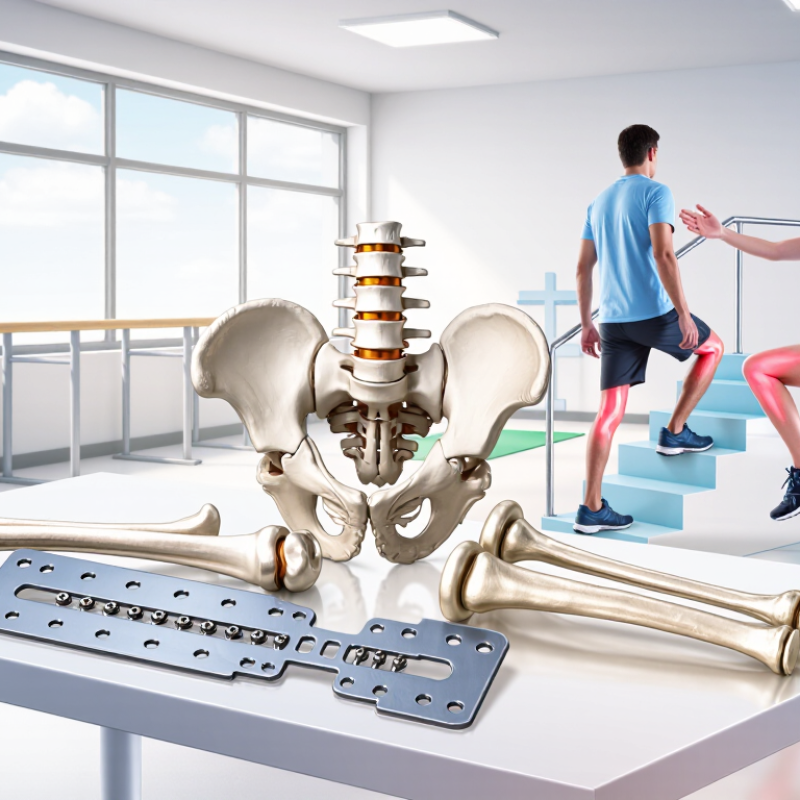
China Top 10 Orthopedic Implants: Can I Play Sports?
China’s ten major orthopedic implant categories serve different clinical needs. Hip, knee, shoulder, and ankle replacements restore damaged joints. Fracture fixation plates, screws, nails, and wires stabilize broken bones. Spinal implants support selected cases involving instability or nerve compression. Sports medicine anchors and interference screws help repair ligaments and tendons. External fixation frames manage complex injuries. Bone substitutes support bone healing. Tumor and reconstruction implants replace damaged bone. Cranial and maxillofacial systems address related structural defects. The final category includes specialized small-joint and hand implants.
Sports participation depends on healing, implant stability, muscle strength, and surgical findings. A patient with a stable knee replacement may cycle, swim, or walk briskly. Running and contact sports create greater impact and twisting forces. A repaired shoulder may need several months before throwing. Timelines differ widely. They are not guarantees. In my clinical reading, patients often focus on the implant, but rehabilitation usually determines functional confidence. That assumption deserves reconsideration.
Tips: Ask your orthopedic surgeon for sport-specific clearance. Follow imaging and rehabilitation milestones carefully. Increase activity gradually, using pain and swelling as warning signs. Supportive shoes matter. Avoid sudden jumps in training volume. Report warmth, drainage, fever, locking, or new instability promptly. A second professional opinion can help when advice feels unclear. Even advanced implants cannot replace biological healing, disciplined exercises, and realistic expectations.
| Orthopedic implant category | Common examples | Typical uses and indications | Sports and activity considerations |
|---|---|---|---|
| 1. Fracture fixation plates | Metal plates secured to bone with screws | Stabilize selected fractures, including fractures near joints or in areas where alignment needs to be maintained during healing. | Sport may be possible after the fracture has healed and strength and movement have recovered. Timing depends on the fracture, fixation, and clinician’s assessment. |
| 2. Bone screws and pins | Compression screws, cortical screws, cancellous screws, and pins | Hold bone fragments together or secure certain fractures, osteotomies, and other bone procedures. | Return to sport depends on bone healing and the treated body part. An implant alone does not establish that high-impact activity is safe. |
| 3. Intramedullary nails | Nails placed within the marrow canal of long bones | Commonly used to stabilize selected fractures of long bones such as the femur or tibia. | Weight-bearing and sports progression vary with the fracture pattern and healing. Running and contact sports generally require medical clearance. |
| 4. Hip replacement implants | Artificial components replacing the hip joint surfaces | Treat severe hip joint damage, commonly from osteoarthritis, and some other conditions causing persistent pain and disability. | Many people resume low-impact activities after recovery. High-impact or collision sports may increase wear, loosening, or injury risk; discuss individual goals with the surgeon. |
| 5. Knee replacement implants | Artificial components replacing part or all of the knee joint | Treat advanced knee joint disease when pain and functional limitations have not improved sufficiently with non-operative care. | Walking, swimming, and cycling are often considered after rehabilitation. High-impact sports are commonly discouraged or require careful individualized discussion. |
| 6. Shoulder replacement implants | Partial, total, or reverse shoulder replacement components | Treat selected cases of severe shoulder arthritis, complex fractures, or major rotator cuff dysfunction, depending on the procedure. | Return depends on the operation and rehabilitation. Overhead, heavy, and contact sports may need modification or may not be recommended. |
| 7. Spinal fixation systems | Rods, screws, plates, and connecting components | Help stabilize the spine during fusion or treatment of selected spinal instability, deformity, fractures, or other conditions. | Activity restrictions depend on the spinal procedure and evidence of healing. Contact sports and heavy lifting should not resume without the treating team’s approval. |
| 8. Intervertebral fusion devices | Cages or spacers used between vertebrae | Maintain disc-space height and support fusion in selected spinal procedures. | Sports progression is guided by symptoms, rehabilitation, and fusion progress. A clinician should confirm when higher-impact activity is appropriate. |
| 9. Ligament reconstruction fixation devices | Interference screws, buttons, and anchors used to secure grafts | Fix grafts during procedures such as selected knee ligament or other ligament reconstructions. | Return to pivoting or contact sports typically requires a structured rehabilitation program and functional testing; timelines vary and cannot be determined by the implant alone. |
| 10. Joint and soft-tissue anchors | Small anchors with sutures for tendon or ligament attachment | Secure repaired soft tissue to bone in selected shoulder, hip, foot, or other procedures. | Sport depends on tissue healing and the repair performed. Early loading or throwing may put the repair at risk, so follow the surgeon’s rehabilitation plan. |
Important: This table provides general educational information, not personal medical advice. Whether and when you can play sports depends on your diagnosis, procedure, healing, strength, range of motion, and clinician’s assessment. Seek clearance from your orthopedic surgeon or rehabilitation team before returning to sport.
Walking, swimming, stationary cycling, and gentle hiking are often lower-impact options. Get approval from your care team.
No. Bone healing, strength, balance, joint stability, and the demands of your sport also matter.
Not reliably. A quiet knee may still struggle with a sudden pivot, and bone can remain weak while feeling better.
Start with daily movement and controlled strength work. Then add balance, brief drills, speed, or impact gradually.
Note exercise duration, pain, and how you feel the next morning. Increase only one demand at a time.
Stop for sharp pain, swelling, catching, or new weakness. Seek care for fever, redness, calf swelling, or sudden loss of function.
No. They may reduce soft-tissue damage, but recovery still depends on healing and rehabilitation.
There is no universal date. These activities place heavier loads on joints and need individual clearance.
Recovery is rarely linear. A flare-up can be useful feedback, not a reason to push harder.
Returning to sports after orthopedic implant surgery depends on the implant category, its location, the reason for surgery, bone healing, and the procedure performed. Orthopedic implants may support fractures, joint replacement, spinal treatment, ligament fixation, or other musculoskeletal repairs, and each situation has different recovery demands. For ACL fixation, available evidence indicates that about 81% of patients return to some form of sport, while approximately 65% regain their preinjury level. These figures are general reference points, not personal guarantees.
Can I play sports after orthopedic implant surgery? In many cases, yes, but readiness should be determined by the surgeon and rehabilitation team. After joint replacement, low-impact activities are generally preferred to reduce stress on the implant and surrounding tissues. A safe return typically requires confirmed healing, restored strength and movement, good balance, and progressive loading through rehabilitation. Patients should begin with controlled activities, increase intensity gradually, and stop if they experience pain, swelling, instability, or unusual symptoms. Clearance from a qualified surgeon is essential before resuming competitive or high-impact sports.
