MGMT Orthopedic Implants MGMT Orthopedic Implants

Why Can I Return to Work After Orthopedic Implant Surgery?

Time:2026-09-07 Author:Oliver
0%

After orthopedic implant surgery, returning to work is rarely decided by one fixed date. Patients often ask, “Can I return to work after orthopedic implant surgery?” The answer depends on the implant, surgical site, healing progress, and job demands. A desk worker may resume limited duties within weeks, while a construction worker may need much longer. Standing, climbing stairs, driving, lifting, or kneeling can change the timeline significantly. A swollen knee at the end of the day may signal that activity increased too quickly. Small details matter.

Orthopedic surgeons and physical therapists usually assess pain, movement, strength, wound healing, and safe mobility before recommending work. They may suggest shorter shifts, regular sitting breaks, lighter lifting, or temporary remote work. Your employer’s occupational health team can also help adjust duties without ignoring medical restrictions. Recovery is not always linear. I have seen general timelines create false confidence when patients feel better but their tissues remain vulnerable. That is an important limitation. Follow-up examinations provide more reliable guidance than online estimates. Contact your surgical team if pain suddenly worsens, redness spreads, drainage appears, or fever develops. Returning too early may delay progress, but staying inactive for too long can also weaken muscles and confidence. The safest decision combines professional assessment, honest self-reporting, and gradual increases in activity. Work readiness should mean controlled movement, not simply tolerable pain.
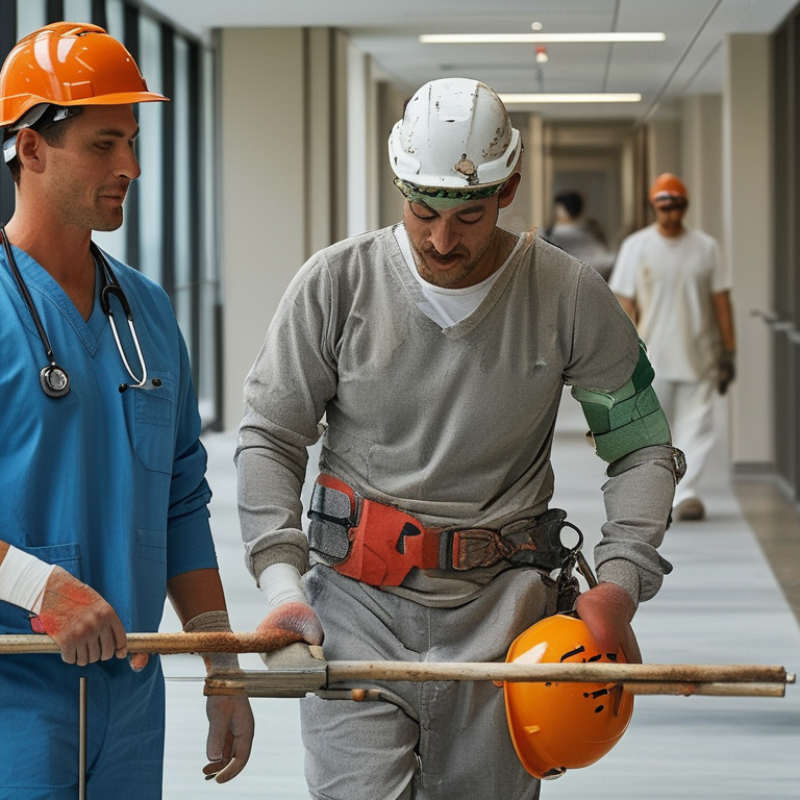
Why Can I Return to Work After Orthopedic Implant Surgery?

What Orthopedic Implant Surgery Changes in the Body

Why Can I Return to Work After Orthopedic Implant Surgery?

Orthopedic implant surgery changes how the body moves, bears weight, and responds to stress. The implant may replace damaged joint surfaces or stabilize a weakened bone. It does not instantly restore normal strength. Nearby muscles often become inhibited after surgery, especially around the hip, knee, or shoulder. Swelling can limit movement and make ordinary tasks feel surprisingly difficult.

The body also begins healing around the surgical area. Bone, connective tissue, and skin recover at different speeds. Your walking pattern may change, even when pain decreases. A short trip across the office can increase swelling by evening. That detail matters. Clinicians usually assess wound healing, joint stability, muscle control, balance, and pain before discussing work duties. They may also review whether your job requires lifting, climbing, driving, or prolonged sitting.

Return-to-work timing depends on both the implant and the workplace. Desk work may be possible earlier, with position changes and scheduled rest. Physical work usually requires stronger muscles and safer movement first. Medication effects, fatigue, and reduced reaction speed can also affect driving or machinery use. Recovery is rarely linear. A good morning does not always predict a good afternoon. One common mistake is treating less pain as complete healing. Your orthopedic team and rehabilitation professional can adjust activity gradually, based on examination findings rather than hope alone.

How Healing Progress Determines Readiness to Work

Why Can I Return to Work After Orthopedic Implant Surgery?

Healing progress, not the calendar alone, determines when work becomes safe after orthopedic implant surgery. Your surgeon may review the incision, swelling, joint movement, muscle control, and imaging during follow-up visits. These checks show whether the tissues are tolerating normal stress.

Pain matters, but it is not the only measure. A knee may feel comfortable while weakness still affects balance. A hip may move well, yet lifting or climbing may overload healing structures. Desk work can sometimes resume earlier, especially when you can sit comfortably, change positions, and travel without worsening symptoms. Physical jobs require more proof. You may need steady walking, safe stair use, controlled bending, and enough strength for repeated tasks.

Small details often reveal readiness. Can you enter a workplace without rushing? Can you stand for ten minutes without increased swelling? Can you complete essential movements the next morning without a pain flare? These questions deserve honest answers.

Recovery is rarely perfectly linear. I might expect progress, then experience stiffness after one busy day. That does not always mean failure, but it may signal that the workload increased too quickly. A gradual return, shorter shifts, lighter duties, and scheduled breaks can protect healing. Follow your surgical team’s restrictions, even when you feel better. Feeling capable is encouraging; demonstrating consistent function is stronger evidence.

Which Factors Influence a Safe Return to Work

Why Can I Return to Work After Orthopedic Implant Surgery?

A safe return to work depends on more than the calendar. The implant may be stable, yet surrounding muscles and soft tissues still need time. Pain, swelling, joint movement, balance, and strength all influence readiness. Pain matters. So does fatigue.

Job demands are equally important. Desk work may require short walks, posture changes, and comfortable sitting. Construction, nursing, warehouse, and delivery work may involve lifting, climbing, kneeling, or sudden movement. Your surgeon or physical therapist should compare these tasks with your current abilities. A staged return may begin with shorter shifts, lighter duties, or extra breaks.

Driving requires careful judgment. You should control the vehicle safely, react quickly, and avoid impairing pain medicines. Workplace layout also matters. Stairs, uneven floors, and crowded spaces can increase risk. An occupational therapist may identify practical changes before you return.

Healing is not perfectly predictable. I once thought a “good” appointment meant every activity could resume, but progress can change after a demanding day. That assumption needs reconsideration.

Increasing redness, drainage, fever, severe pain, calf swelling, or sudden shortness of breath needs prompt medical attention. Keep communication open with your healthcare team and employer. A return-to-work plan should be adjusted when symptoms, treatment, or job requirements change.

How Work Demands Affect the Return-to-Work Timeline

Why Can I Return to Work After Orthopedic Implant Surgery?

Your return-to-work date depends more on job demands than the implant itself. A desk job may allow work within two to six weeks, if pain is controlled and sitting is tolerable. A warehouse role is different. It may require lifting, climbing, kneeling, or long periods on hard floors.

A systematic review in BMJ Open reported that roughly 70% of knee replacement patients returned to work. Hip replacement patients showed rates near 80%. However, timelines varied widely. Many patients needed several weeks or months before resuming full duties. The American Academy of Orthopaedic Surgeons also stresses gradual activity progression and surgeon-guided restrictions. These figures are useful, but they are not promises. Recovery can be slower than expected. I used to think motivation solved most delays. It does not.

Tips: Ask your surgeon for written limits on lifting, walking, stairs, driving, and kneeling. Share your actual job description, not only your job title. A phased schedule can begin with shorter shifts, seated tasks, and extra movement breaks. Watch for swelling after work. It may reveal that your workload is advancing too quickly.

The National Institute for Occupational Safety and Health identifies force, repetition, awkward postures, and prolonged standing as major physical demands. These factors can extend recovery after joint surgery. A worker returning to computer duties may need ergonomic changes. Someone handling heavy boxes may need temporary reassignment. Your incision can look healed while strength and balance remain incomplete. Clearance should reflect both.

Why Can I Return to Work After Orthopedic Implant Surgery? - How Work Demands Affect the Return-to-Work Timeline

Typical planning ranges are general estimates. The treating surgeon and rehabilitation team should determine the actual return-to-work date.
Work-demand category Typical job activities Common planning range after uncomplicated joint-replacement surgery Why the timeline may differ Helpful temporary adjustments
Sedentary or desk-based Computer work, telephone duties, meetings, and short periods of walking About 2–6 weeks, if pain is controlled and commuting is safe Ability to sit comfortably, manage swelling, use mobility aids, and safely operate a vehicle Phased hours, remote work, frequent position changes, leg elevation, and an accessible workstation
Light-duty work Standing or walking for part of the day, light handling, and occasional bending About 4–8 weeks Walking endurance, balance, stair use, residual swelling, and the need to avoid repetitive twisting or kneeling Shorter shifts, a sit-stand option, reduced walking distances, and limits on kneeling or squatting
Moderate-demand work Frequent standing, lifting or carrying moderate loads, climbing, and repeated bending About 8–12 weeks Strength recovery, gait quality, load-handling requirements, uneven surfaces, and fatigue during a full shift Weight limits, team lifting, fewer stairs, scheduled rest breaks, and gradual increases in workload
Heavy or physically demanding Heavy lifting, pushing or pulling, prolonged squatting, kneeling, climbing, or manual labor About 12–24 weeks; some tasks may require longer restrictions High joint loads, impact, repetitive movements, reduced strength, and the need to protect healing tissues Restricted lifting, no impact activities, mechanical assistance, task rotation, and a staged return to full duties
Driving-intensive work Professional driving, frequent vehicle entry and exit, and transporting equipment Often about 4–8 weeks, but timing varies substantially Surgical side, vehicle type, emergency-braking ability, reaction time, pain medication, and insurance or regulatory requirements Short routes, additional breaks, no heavy loading, and medical confirmation of safe driving ability
Overhead or upper-limb work Reaching above shoulder level, pushing, pulling, tool use, and repetitive arm activity About 8–16 weeks after many shoulder implant procedures; heavy overhead work may take longer Healing restrictions, shoulder range of motion, lifting limits, and restoration of strength and control Keep work below shoulder height, avoid forceful pulling, use lighter tools, and increase activity gradually
Important: A return-to-work date depends on the implant procedure, surgical approach, healing progress, physical therapy, pain control, job-specific risks, and the ability to perform essential tasks safely. Do not drive, lift beyond prescribed limits, or resume impact activities until cleared by the treating clinician.

What Medical Assessments Support a Gradual Work Resumption

Why Can I Return to Work After Orthopedic Implant Surgery?

Returning to work depends on medical evidence, not a calendar date. Your surgeon checks wound healing, implant stability, swelling, strength, and joint movement. Follow-up X-rays may confirm that the implant remains properly positioned. Pain should also be controlled without sedating medication. Driving, climbing stairs, or operating machinery requires clear judgment.

A 2023 systematic review in the Journal of Arthroplasty reported that about 70% to 90% of working-age patients return after total hip replacement. Many return within three to six months, although physically demanding jobs often require more time. The American Academy of Orthopaedic Surgeons notes that recovery timelines vary with the joint replaced, health status, and daily workload. Numbers guide decisions, but they do not replace an examination.

A physical therapist may measure walking speed, balance, lifting tolerance, and repeated movements. An occupational health clinician can compare these results with your actual duties, such as carrying boxes or standing beside a production line. A graded plan might begin with shorter shifts, seated tasks, and scheduled movement breaks. Stop and report increasing warmth, drainage, calf pain, or sudden breathlessness. These symptoms need prompt assessment. I have seen return-to-work plans fail when strength looked acceptable, but endurance was ignored. That gap deserves honest review.

Why Can I Return to Work After Orthopedic Implant Surgery?

Medical assessments that support a gradual work resumption

A gradual return to work is typically considered when the incision is healed, pain and swelling are controlled, range of motion and strength are improving, gait or limb function is safe, and imaging or clinical examination shows acceptable implant stability. The time windows shown are representative postoperative review ranges, not a universal protocol. The final decision depends on the procedure, healing progress, work demands, and the treating clinician’s restrictions.

FAQS

: When can I safely return to work after orthopedic implant surgery?

: There is no universal date. Return depends on healing, pain, swelling, strength, balance, and joint movement. Recovery is uneven. Your healthcare team should confirm readiness.

Which medical checks support a gradual return?

Your surgeon may assess wound healing, implant position, swelling, movement, strength, and pain control. Follow-up imaging may be needed. A calendar cannot replace an examination.

How do job duties affect my return date?

Desk work may require comfortable sitting, short walks, and posture changes. Physical jobs may involve lifting, climbing, kneeling, or sudden movement. Heavy duties often need more time.

What does a staged return to work look like?

You might begin with shorter shifts, lighter tasks, seated duties, or extra breaks. Duties can increase as endurance improves. Start gently. The plan should change when symptoms change.

Can physical therapy testing help determine work readiness?

A therapist may measure walking speed, balance, lifting tolerance, strength, and repeated movements. These results should match your actual work tasks. Endurance matters too. It is easy to overlook.

When is driving or machinery use safe?

You should control the vehicle, react quickly, and make clear decisions. Sedating pain medicine can make driving unsafe. Stairs and crowded areas also require caution. Do not rush this decision.

What workplace changes may reduce risk?

An occupational health professional may review uneven floors, stairs, crowded spaces, lifting demands, and standing time. Temporary adjustments can make work safer. Small changes help.

Which symptoms require prompt medical attention?

Increasing redness, wound drainage, fever, severe pain, calf swelling, or sudden shortness of breath needs prompt assessment. Contact your healthcare team immediately. Do not ignore warning signs.

Conclusion

Can I return to work after orthopedic implant surgery? The answer depends on how your body is healing, the type of implant procedure performed, and the physical or mental demands of your job. Surgery may temporarily affect strength, mobility, balance, swelling, pain levels, and joint stability. Returning too soon can place unnecessary stress on healing tissues, while a gradual and well-planned transition can support recovery and reduce setbacks.

Readiness is usually based on progress in movement, wound healing, pain control, endurance, and the ability to perform work-related activities safely. Desk-based duties may resume earlier than jobs involving lifting, climbing, prolonged standing, kneeling, or repetitive motion. Healthcare assessments may include physical examinations, mobility and strength checks, imaging when appropriate, and review of functional goals. A medical professional may recommend modified duties, shorter shifts, assistive equipment, or staged increases in workload until the body can tolerate normal responsibilities safely.

Oliver

Oliver

Oliver is a seasoned marketing professional with a wealth of expertise in driving brand awareness and engagement. With a deep understanding of our company's product offerings, he consistently delivers high-quality content that enriches our professional blog. His insights not only shed light on......