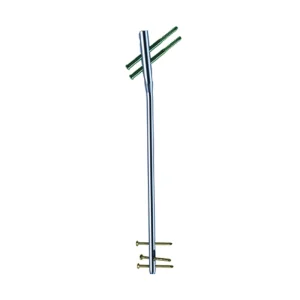
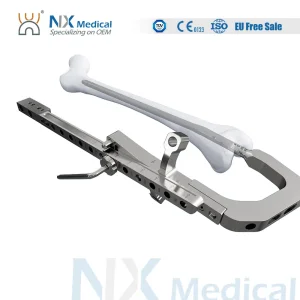
MGMT Orthopedic Implants
MGMT Orthopedic Implants
MGMT Orthopedic Implants
The global orthopedic implant market is witnessing a paradigm shift, with Femoral Locking Plates becoming the gold standard for treating complex fractures. As aging populations increase worldwide and trauma cases from high-energy accidents rise, the demand for stable internal fixation has skyrocketed. In the current industrial landscape, femoral locking plates are no longer just "hardware"—they are sophisticated biomechanical instruments designed to promote secondary bone healing through controlled micro-motion.
From North America to the European Union, the clinical adoption of Locking Compression Plate (LCP) technology has replaced traditional non-locking systems. This shift is driven by the plates' ability to act as internal fixators, preserving the periosteal blood supply while providing superior stability in osteoporotic bone. For global distributors and hospital procurement departments, sourcing from high-capacity factories in China has become a strategic necessity to balance cost-efficiency with uncompromising quality.
Modern surgery requires flexibility. Variable angle locking technology allows surgeons to direct screws into specific bone fragments, avoiding joint surfaces and existing implants.
The shift towards Grade 5 Titanium alloys ensures high fatigue strength and MRI compatibility, reducing long-term complications for patients.
Top factories are now using AI to analyze thousands of CT scans to optimize the anatomical contouring of plates, ensuring a perfect fit for diverse ethnicities.
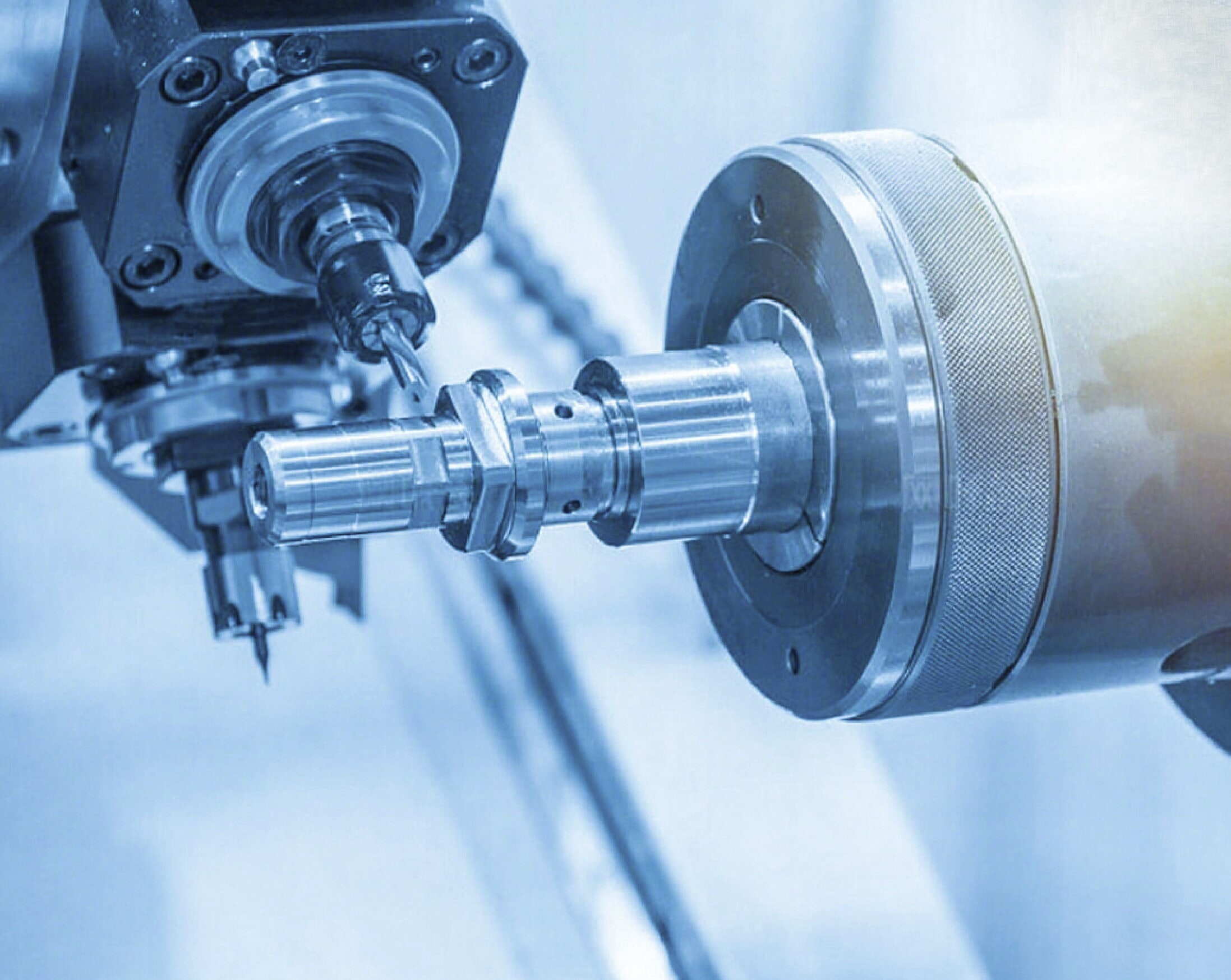
Gone are the days of manual plate bending in the OR. Today's femoral locking plate factories utilize 5-axis CNC machining to create pre-contoured plates that match the complex curvature of the human femur. This trend significantly reduces surgical time and the risk of soft tissue irritation.
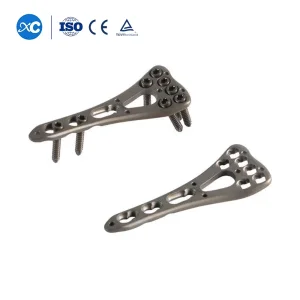
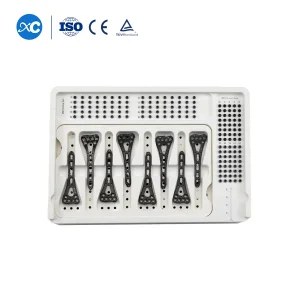
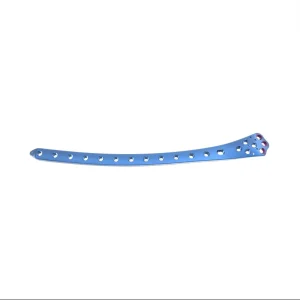
Our flagship Variable Angle Orthopedic LCP Distal Femoral Locking Plate represents the pinnacle of this trend, offering unmatched intraoperative flexibility.
Procurement officers in the medical sector are currently facing a dual challenge: maintaining high clinical outcomes while navigating tightening hospital budgets. The global procurement demand for orthopedic implants has shifted toward partners who can provide:
Our factory specializes in addressing these needs, providing a bridge between high-end Swiss-quality engineering and large-scale manufacturing efficiency.
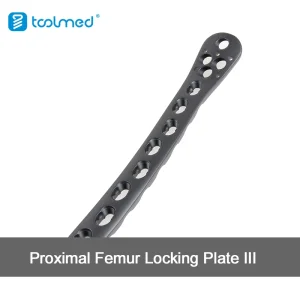
In high-income regions, the Proximal Lateral Femoral Plate is frequently used in geriatric care for periprosthetic fractures around hip replacements. Conversely, in developing markets, these plates are essential for high-velocity trauma cases resulting from industrial or transport accidents. Our design philosophy accounts for these varied scenarios, ensuring the implant performs under diverse mechanical stresses.
MGMT is not just a factory; we are a technology-driven manufacturing partner. As a leading OEM/ODM manufacturer specializing in orthopedic instruments, we provide comprehensive medical device contract manufacturing solutions.




MGMT invests strategically in state-of-the-art manufacturing technologies to deliver unmatched precision machining capabilities for orthopedic medical instruments. Our commitment to innovation spans advanced CNC systems, five-axis machining centers, and automated inspection tools, enabling us to achieve micron-level tolerances critical for medical device accuracy.
Our vertically integrated approach—from design validation to rapid prototyping—accelerates time-to-market while adhering to ISO 13485 standards. Whether machining multi-faceted components or micro-machined features requiring high precision, we leverage automated quality control systems (e.g., CMM inspection) to ensure every part meets rigorous medical device requirements.
The biomechanics of a femoral locking plate are rooted in the principle of "stress shielding" reduction. By creating a fixed-angle construct, the locking plate shares the load with the bone while maintaining a gap between the plate and the periosteum. This is crucial for maintaining blood flow, which is the lifeblood of bone regeneration.
In our China-based factory, we primarily utilize Ti-6Al-4V (Grade 5 Titanium). This material offers a unique balance of high strength-to-weight ratio and a modulus of elasticity that is closer to human bone than stainless steel. This similarity helps in reducing the stress shielding effect, where the bone becomes weak because the implant is taking too much of the load. Furthermore, titanium's superior biocompatibility allows for excellent osseointegration.
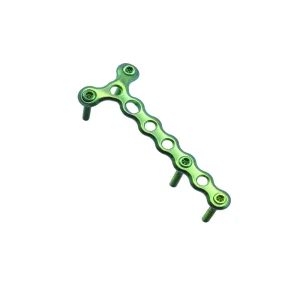
Our manufacturing process doesn't end with machining. Each Femoral Locking Plate undergoes rigorous surface treatments, such as Type II anodization, to enhance fatigue resistance and provide color-coding for easier surgical identification. Final cleaning and packaging are conducted in Class 100,000 clean rooms, ensuring that every implant arrives at the hospital sterile and ready for the operating theater.
Understanding the urgency of medical supplies, MGMT has established a robust logistics network. Whether you are a distributor in South America, a hospital group in Southeast Asia, or an OEM brand in Europe, our location in China's industrial heartland allows for rapid shipping via air or sea, ensuring your inventory levels remain optimal.