 MGMT Orthopedic Implants
MGMT Orthopedic Implants
MGMT Orthopedic Implants
In recent years, the use of Spinal Pedicle Screws has revolutionized spinal surgery. Dr. John Smith, a renowned orthopedic surgeon, has stated, “Spinal Pedicle Screws provide stability and support to the spine.” This statement highlights their critical role in surgical outcomes.
Spinal Pedicle Screws anchor implants to the spine's vertebrae. They enhance fixation, allowing surgeons to align and stabilize the spine precisely. This is essential in conditions like scoliosis or spinal fractures. However, placing these screws can be challenging and requires skill. Improper placement may lead to complications. Surgeons often reflect on their techniques and experiences.
Despite advances, the use of Spinal Pedicle Screws is not without debate. Some question their long-term effectiveness and safety. Others emphasize the importance of careful patient selection. As surgical practices evolve, ongoing research and discussion are vital for improving outcomes.
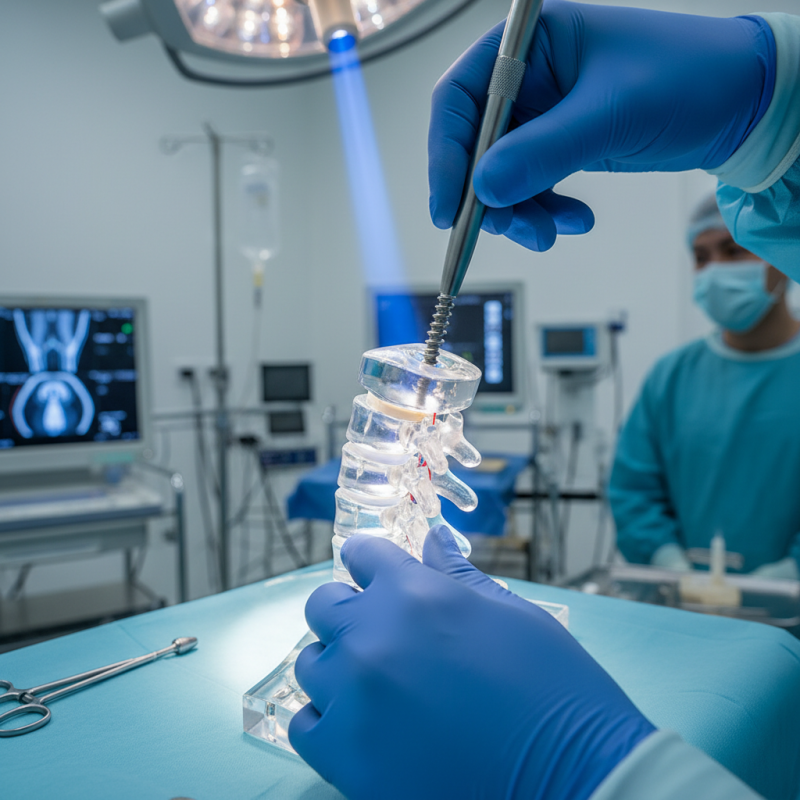
Spinal pedicle screws are critical components in spinal surgery. These screws are designed to anchor the spine’s framework. Typically made from titanium or stainless steel, they provide strength and stability. Their design allows them to screw into the vertebrae's pedicles, which are bony structures. This placement ensures a secure fit.
The composition of spinal pedicle screws is engineered for durability. Titanium, known for its biocompatibility, is often favored. It reduces the risk of rejection by the body. Some screws may incorporate polymers to enhance comfort. The head of the screw is often shaped for easy connection to rods. These features aid in the alignment of the spine.
Despite their effectiveness, the use of pedicle screws can be challenging. Surgeons must ensure precise placement to avoid complications. Misplacement can lead to issues such as nerve damage or pain. Continuous improvement in design and technique is necessary. Reflection on past surgeries can help refine these practices. The aim is to enhance both safety and effectiveness in spinal procedures.
| Aspect | Details |
|---|---|
| Definition | Spinal pedicle screws are devices used in spinal surgery to stabilize the spine. |
| Purpose | To provide spinal stability and support during fusion procedures. |
| Common Materials | Typically made from titanium or stainless steel for strength and biocompatibility. |
| Types | Universal pedicle screws, expandable screws, and cannulated screws. |
| Indications for Use | Used in various conditions such as scoliosis, spinal fractures, and degenerative disk disease. |
| Advantages | Provides excellent fixation, reduces surgery time, and promotes better outcomes in fusion. |
| Insertion Methods | Can be inserted directly or with assistance from fluoroscopy or navigation systems. |
| Risks | Potential risks include infection, screw loosening, and nerve damage if not placed correctly. |
: They anchor the spine's framework during spinal surgery.
Titanium and stainless steel are typically used for their strength.
They provide stability and support for the spine, enhancing alignment.
Misplacement can cause nerve damage, pain, or mobility issues.
3D navigation imaging techniques improve accuracy by over 30%.
They promote bone growth and improve stabilization around the implant site.
Yes, hardware failure is a risk and may lead to complications.
Patients need to understand the risks involved for informed consent.
3D printed screws can be customized for better fitting and comfort.
There’s a need for effective training and long-term performance studies.
Spinal Pedicle Screws are integral components used in various spinal surgical procedures to enhance stability and alignment of the spine. Made from biocompatible materials, these screws are strategically placed in the pedicles of the vertebrae to support rods and other instrumentation, thus allowing for effective correction of spinal deformities. Indications for their use include conditions such as scoliosis, spondylolisthesis, and severe fractures, where stabilization is critical for successful recovery.
The benefits of Spinal Pedicle Screws are evident in their ability to provide robust support and improve postoperative outcomes. Recent advances in technology have led to the development of more sophisticated pedicle screw systems, enhancing their placement accuracy and overall effectiveness. However, it is important to acknowledge the potential complications and risks associated with their use, including infection, neurovascular injury, and screw misplacement, necessitating careful planning and execution during surgical procedures.
