MGMT Orthopedic Implants
MGMT Orthopedic Implants
MGMT Orthopedic Implants
The global sports medicine market has witnessed a paradigm shift in recent years, with Posterior Cruciate Ligament (PCL) reconstruction emerging as a critical focus area. Unlike the more common ACL injuries, PCL tears often involve complex multi-ligament traumas, necessitating highly specialized fixation systems. Current industrial data suggests that the demand for orthopedic implants and instrumentation is growing at a CAGR of 6.5%, driven by an aging yet active global population and the rise of professional sports activities.
Top-tier PCL fixation systems factories are now integrating advanced robotics and bio-material science to produce implants that mimic natural bone-tendon healing. From North America to the Asia-Pacific region, medical facilities are prioritizing systems that offer biomechanical stability and long-term biocompatibility.
Modern surgery is moving away from traditional stainless steel towards high-performance polymers and bio-resorbable materials. The adoption of PEEK (Polyetheretherketone) interference screws has revolutionized PCL fixation. PEEK offers a modulus of elasticity similar to human bone, which significantly reduces "stress shielding" and improves the quality of post-operative MRI imaging, as it is radiolucent.
Furthermore, the integration of hydroxyapatite in biocomposite screws facilitates osteoconduction, allowing the screw to be replaced by natural bone over time. This trend is a major driver for innovation in orthopedic factories worldwide, where R&D focuses on the intersection of mechanics and biology.
International hospital groups and orthopedic distributors face the constant challenge of balancing quality with cost-efficiency. Global procurement needs have shifted from simple "off-the-shelf" products to comprehensive OEM/ODM partnerships. Buyers today look for factories that can provide:
As a leading Chinese manufacturer, we address these needs by offering vertically integrated solutions that reduce the distance between design concept and clinical application.
China has evolved from a high-volume manufacturing hub into a center for high-precision medical innovation. Our factory leverages this industrial ecosystem to provide competitive advantages that Western counterparts often struggle to match:
We provide rapid prototyping at a fraction of the cost, allowing for faster iterations of PCL fixation designs.
From raw titanium and PEEK sourcing to sterile packaging, every step is controlled in-house.
Utilization of automated inspection tools and CMM ensures 100% consistency across large batches.
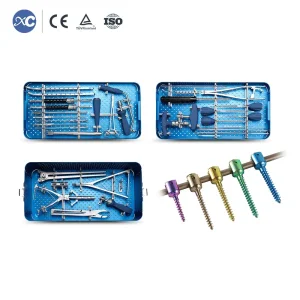
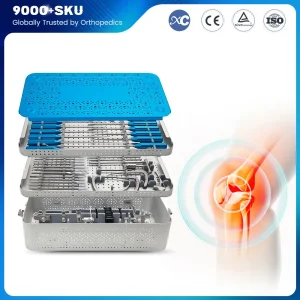
MGMT is a leading OEM/ODM manufacturer specializing in orthopedic instruments. We are your one-stop shop for comprehensive medical device contract manufacturing solutions. Our expertise lies in crafting highly efficient, innovative, and fully customized orthopedic medical devices. By leveraging advanced technologies and a deep understanding of industry needs, our divisions will partner with you to refine your designs, improving performance and reducing cost while ensuring compliance with established and emerging regulations. Trust us to transform your concepts into state-of-the-art orthopedic products that enhance patient care and drive your business forward.
Precision Medical Manufacturing: MGMT invests strategically in state-of-the-art manufacturing technologies to deliver unmatched precision machining capabilities for orthopedic medical instruments. Our commitment to innovation spans advanced CNC systems, five-axis machining centers, and automated inspection tools, enabling us to achieve micron-level tolerances critical for medical device accuracy.
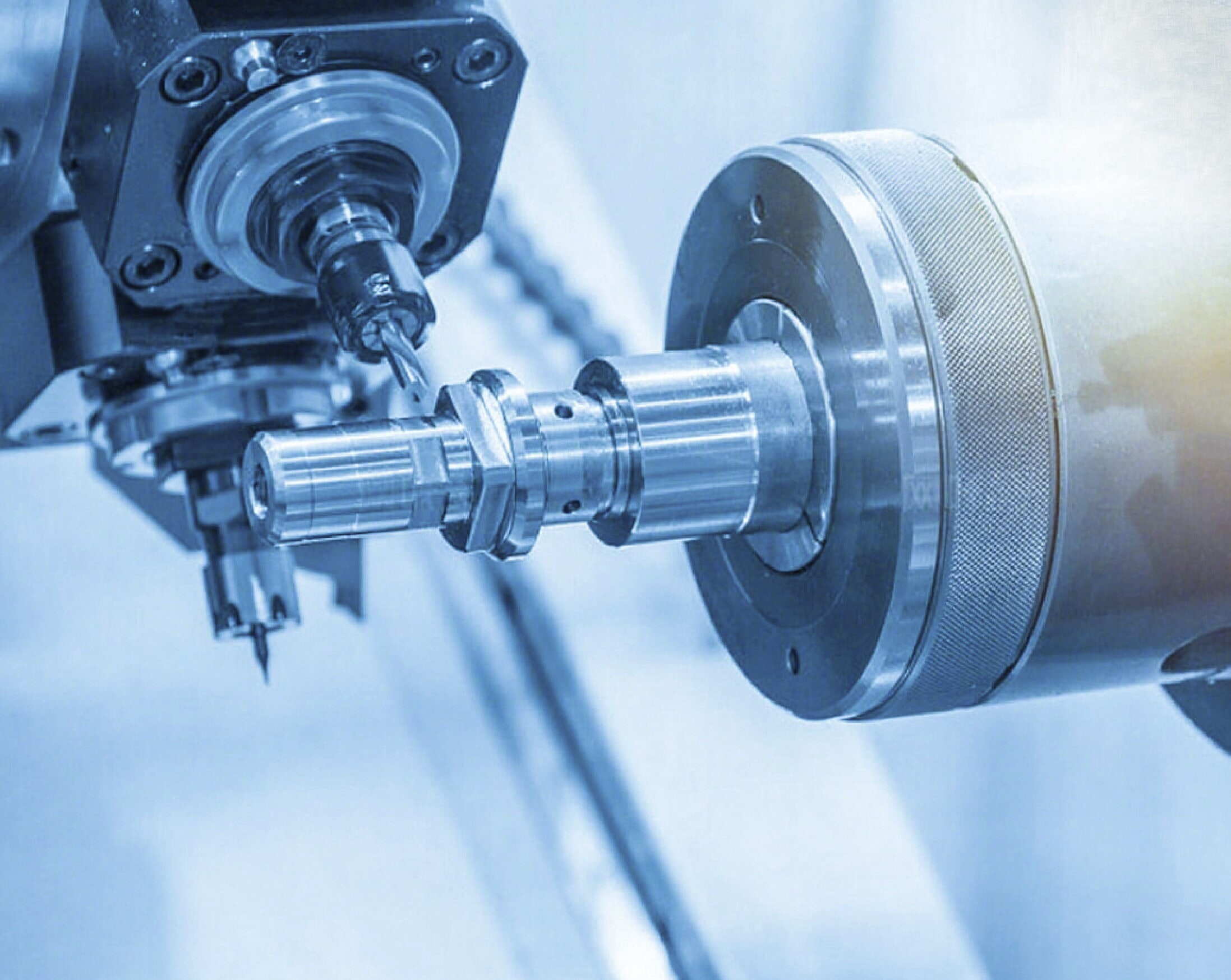

FT2 Workshop Area

Years Establishment

Engineer Team

Business Coverage Countries
The application of PCL fixation systems varies across different surgical environments. In Sports Medicine Clinics, the focus is on minimally invasive arthroscopy, requiring low-profile anchors and high-strength sutures that allow for early mobilization of the patient. In Trauma Centers, however, PCL injuries are often associated with knee dislocations, requiring heavy-duty fixation systems that can stabilize the entire joint structure.
Our vertically integrated approach—from design validation to rapid prototyping—accelerates time-to-market while adhering to ISO 13485 standards. Whether machining multi-faceted components or micro-machined features requiring high precision, we leverage automated quality control systems (e.g., CMM inspection) to ensure every part meets rigorous medical device requirements.